


» Site Map
» Home Page
Historical Info
» Find Friends - Search Old Service and Genealogy Records
» History
» QAIMNS for India
» QAIMNS First World War
» Territorial Force Nursing Service TFNS
» WW1 Soldiers Medical Records
» Field Ambulance No.4
» The Battle of Arras 1917
» The German Advance
» Warlencourt Casualty Clearing Station World War One
» NO 32 CCS Brandhoek - The Battle of Passchendaele
» Chain of Evacuation of Wounded Soldiers
» Allied Advance - Hundred Days Offensive
» Life After War
» Auxiliary Hospitals
» War Graves Nurses
» Book of Remembrance
» Example of Mentioned in Despatches Letter
» Love Stories
» Autograph Book World War One
» World War 1 Letters
» Service Scrapbooks
» QA World War Two
» Africa Second World War
» War Diaries of Sisters
» D Day Normandy Landings
» Belsen Concentration Camp
» Italian Sailor POW Camps India World War Two
» VE Day
» Voluntary Aid Detachment
» National Service
» Korean War
» Gulf War
» Op Telic
» Op Gritrock
» Royal Red Cross Decoration
» Colonels In Chief
» Chief Nursing Officer Army
» Director Army Nursing Services (DANS)
» Colonel Commandant
» Matrons In Chief (QAIMNS)
Follow us on Twitter:

» Grey and Scarlet Corps March
» Order of Precedence
» Motto
» QA Memorial National Arboretum
» NMA Heroes Square Paving Stone
» NMA Nursing Memorial
» Memorial Window
» Stained Glass Window
» Army Medical Services Monument
» Recruitment Posters
» QA Association
» Standard
» QA and AMS Prayer and Hymn
» Books
» Museums
Former Army Hospitals
UK
» Army Chest Unit
» Cowglen Glasgow
» CMH Aldershot
» Colchester
» Craiglockhart
» DKMH Catterick
» Duke of Connaught Unit Northern Ireland
» Endell Street
» First Eastern General Hospital Trinity College Cambridge
» Ghosts
» Hospital Ghosts
» Haslar
» King George Military Hospital Stamford Street London
» QA Centre
» QAMH Millbank
» QEMH Woolwich
» Medical Reception Station Brunei and MRS Kuching Borneo Malaysia
» Military Maternity Hospital Woolwich
» Musgrave Park Belfast
» Netley
» Royal Chelsea Hospital
» Royal Herbert
» Royal Brighton Pavilion Indian Hospital
» School of Physiotherapy
» Station Hospital Ranikhet
» Station Hospital Suez
» Tidworth
» Ghost Hunt at Tidworth Garrison Barracks
» Wheatley
France
» Ambulance Trains
» Hospital Barges
» Ambulance Flotilla
» Hospital Ships
Germany
» Berlin
» Hamburg
» Hannover
» Hostert
» Iserlohn
» Munster
» Rinteln
» Wuppertal
Cyprus
» TPMH RAF Akrotiri
» Dhekelia
» Nicosia
Egypt
» Alexandria
China
» Shanghai
Hong Kong
» Bowen Road
» Mount Kellett
» Wylie Road Kings Park
Malaya
» Kamunting
» Kinrara
» Kluang
» Penang
» Singapore
» Tanglin
» Terendak
Overseas Old British Military Hospitals
» Belize
» Falklands
» Gibraltar
» Kaduna
» Klagenfurt
» BMH Malta
» Nairobi
» Nepal
Middle East
» Benghazi
» Tripoli
Field Hospitals
» Camp Bastion Field Hospital and Medical Treatment Facility MTF Helmand Territory Southern Afghanistan
» TA Field Hospitals and Field Ambulances
Haslar Royal Naval Navy Hospital
Information and history of the Haslar Royal Naval Navy Hospital
Though a Navy hospital RN Haslar in Gosport became a tri-service hospital in the 1990s. Many members of the Queen Alexandra's Royal Army Nursing Corps were posted to Haslar.
RN Haslar History

Prior to Haslar Hospital medical care for sailors in the Gosport area was very basic and took place in a variety of places. The lucky ones received care at the privately run Fortune Hospital at Lees lane whilst those less fortunate would ne cared for in ale houses or aboard ships that were in anchor at the harbour.
The Royal Hospital Haslar: A Pictorial History
The Royal Hospital Haslar: A Pictorial History
 is a new book about the hospital and is full of photos of RH Haslar taken over the centuries with information about its history.
Buy Now.
The Admiralty submitted plans to King George II for a Naval Hospitals and the building was given permission. The site for Haslar hospital was purchased in 1745. The area was farmed and was called Haslar Farm though this was spelt Hasler Farm at the time. The site was an unusual location for a hospital because it was surrounded by the Gosport Creek with no readily available access. The area was chosen to prevent sailors who had been press ganged, ie taken against their will by a gang of sailors and kept locked aboard ship until well at sea and then made to work for the Navy, from absconding.
 Building work started in 1746.
Haslar hospital was designed by Theodore Jacobsen FRS, the surveyor was James Horne and a master carpenter from Portsmouth Dockyard.
Builders were also press ganged by sailors and this delayed the building work of RH Haslar as new builders had to be found.
Royal Hospital Haslar was the largest brick building in England and indeed Europe. The hospital was
semi-completed seven years later and the first patients admitted to RN Haslar was on the 23 October 1753. Building
work of two more wings continued for another nine years.
Building work started in 1746.
Haslar hospital was designed by Theodore Jacobsen FRS, the surveyor was James Horne and a master carpenter from Portsmouth Dockyard.
Builders were also press ganged by sailors and this delayed the building work of RH Haslar as new builders had to be found.
Royal Hospital Haslar was the largest brick building in England and indeed Europe. The hospital was
semi-completed seven years later and the first patients admitted to RN Haslar was on the 23 October 1753. Building
work of two more wings continued for another nine years.
A Physician of note in the early years of Haslar Hospital was James Lind who was nicknamed the Father of Nautical Medicine who publiched his clinical trial about the effects of lime and lemon juice on the disease scurvy.
Follow us on Facebook, Instagram and Twitter.
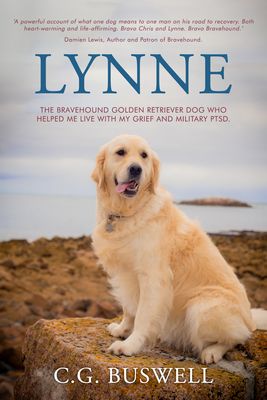
My PTSD assistance dog, Lynne, and I have written a book about how she helps me with my military Post Traumatic Stress Disorder, anxiety, and depression. I talk about my time in the QAs and the coping strategies I now use to be in my best health.
Along the way, I have had help from various military charities, such as Help for Heroes and The Not Forgotten Association and royalties from this book will go to them and other charities like Bravehound, who paired me with my four-legged best friend.
I talk openly about the death of my son by suicide and the help I got from psychotherapy and counselling and grief charities like The Compassionate Friends.
The author, Damien Lewis, said of Lynne:
"A powerful account of what one dog means to one man on his road to recovery. Both heart-warming and life-affirming. Bravo Chris and Lynne. Bravo Bravehound."
Download.
Buy the Paperback.
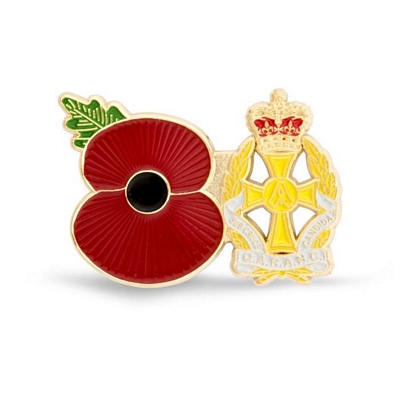
This beautiful QARANC Poppy Pin Badge is available from the Royal British Legion Poppy Shop.
For those searching military records, for information on a former nurse of the QAIMNS, QARANC, Royal Red Cross, VAD and other nursing organisations or other military Corps and Regiments, please try Genes Reunited where you can search for ancestors from military records, census, birth, marriages and death certificates as well as over 673 million family trees. At GenesReunited it is free to build your family tree online and is one of the quickest and easiest ways to discover your family history and accessing army service records.
More Information.
Another genealogy website which gives you access to military records and allows you to build a family tree is Find My Past which has a free trial.
Haslar Hospital Design
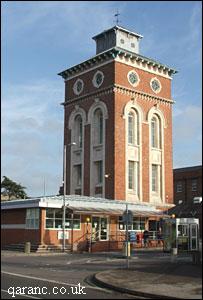 Over the centuries little changed to the design of the building - it was a three storey plain building of
strong construction and even survived the Luftwaffe bombing 200 years later. It is thought that the Germans
intentionally did not bomb the area because they were using the tall water tower as a navigation aid for their
bomber planes to reach Portsmouth.
Over the centuries little changed to the design of the building - it was a three storey plain building of
strong construction and even survived the Luftwaffe bombing 200 years later. It is thought that the Germans
intentionally did not bomb the area because they were using the tall water tower as a navigation aid for their
bomber planes to reach Portsmouth.
The architect designed an attractive frontage and quadrangle which added character to the hospital. High and large windows encouraged natural light.
Navy Patients
In the early days of Haslar Royal Naval Hospital patients had to be transferred to the hospital by rowing ship from the Navy ships at the harbour because there was no bridge. It is thought that the phrase "Up the creek" may have originated from sailors who knew that if you were rowed to Haslar you were in trouble.
Patients would then be taken to the hospital wards and departments in cradles on wheels which were basic carts. As the hospital developed a rail track was built to make transferring patients easier. A bridge was eventually built over Haslar Creek by 1795. This was replaced by another more substantial bridge in 1835 which gave access to Haslar Hospital and the town of Gosport.
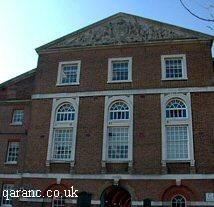
Haslar Hospital has always been run like a ship with nurses and patients using Navy terminology such as heads for the toilets and deck for the ward.
A hospital Chapel was built by 1762. This was called the Hospital Church of St Luke.
For a comprehensive history of the QARNNS written by Kathleen Harlan, a former Matron in Chief read the book History of Queen Alexandra's Royal Naval Nursing Service

Napoleanic Years
During the Peninsular Wars in 1809 Royal Hospital Haslar treated patients from Portugal and Spain who were allied with Britain during the Napoleanic War of 1808 to 1814 against France. This included in campaigns like Trafalgar, Corunna and Waterloo. Military dead were buried at Haslar in the paddock to the south-west of the hospital. It is thought that over 10,000 servicemen are buried there and that this is the densest burial area in the UK.
Royal Naval Hospital (RNH) Haslar
In 1902 the title of the hospital become the Royal Naval Hospital (RNH) Haslar and the Queen Alexandra’s Royal Naval Nursing Service (QARNNS) were formed. Prior to this and from 1884 nursing sisters at Royal naval Hospital Haslar were civilian nurses who were attached to the Royal Navy (cited in the book Queen Alexandra's Royal Army Nursing Corps (Famous Regts. S)
 by Juliet Piggott).
World War Two
During World War Two RNH Haslar nursed military casualties back to health. The nearby ports were a target for the German Luftwaffe bombs and though it was thought that they used the Haslar Water Tower as a navigational aid the hospital did suffer from air raids and the nurses would evacuate the patients to the basements.
Patients who were bed bound with limbs in plaster of Paris and elevated by pulleys on their bed frame were issues with a knife that was stored within easy reach. In the event of a bombardment they could cut the cord of the counter weight to free themselves so that they could get to the relative safety of the cellars of Haslar hospital.
In the book Combat Nurse
 by Eric Taylor he cites the nearby port of Portsmouth as having in the first 11 months of the Second World War 792 air raid warnings and 65000 bomb damaged homes.
Air raids were so frequent that the Voluntary Aid Detachments (VADs) set up an operating theatre in the cellars. This was increased to six theatre tables to cope with the increased surgery from wounded troops arriving straight from Normandy. There is more written about theses underground Haslar operating theatres in Millions Like Us: Women's Lives in War and Peace 1939-1949
 .
.
Though relatively unscathed by bombings the Museum at Haslar was destroyed and many specimens and artefacts collected by Navy Surgeons over the centuries were destroyed.
First Blood Bank
The first blood bank in Britain was set up at Haslar Royal Naval Hospital near Portsmouth (cited in Millions Like Us: Women's Lives in War and Peace 1939-1949
) which describes the work of VAD nurse Helen Vlasto who helped to set up this first blood bank in 1940.
Normandy Landing Wounded and Injured
During Operation Overlord, the D Day Normandy Landings of June 1944, members of the QARNNS were deployed to the frontline. Eighty navy nurses and 140 nursing members of the Voluntary Aid Detachment (VAD) joined the Haslar detachment. Their numbers were swelled by other hospital staff including pharmacists who were quickly given sick berth attendant training by the nurses. They were led by Matron Matilda Goodrich who went on to become a Matron in Chief of the QARNNS.
Those nurses left at Royal Naval Hospital Haslar worked ceaselessly to care for the wounded and injured from Normandy who were initially transferred from the French beach straight to Haslar where they underwent emergency operations and treatments before being moved to inland hospitals throughout England.
Penicillin was used for the first time and saved many a life, especially when combined with anti-gas serum for those infected with gas gangrene. Many limbs were saved from amputation from these three hourly injections by the hard working and dedicated nurses.
Far East
As the war in Europe drew to a close the war with Japan in the Far East remained ferocious. More nurses and doctors were needed to care for the wounded and injured. Nurses from Haslar were once more deployed to locations like Burma at Casualty Clearing Stations and a newly set up field hospital at Herne Hill Hospital in Sydney were it was quicker and safer to evacuate servicemen who were injured defending the Pacific Island and Burma from the Japanese Army.
The book Combat Nurse
by Eric Taylor has many recollections and memories of nurses who served at Royal Naval Hospital Haslar in Gosport during the Second World War including those sent to
Normandy and the Far East.
An Hour with Jon Pertwee
In his audience with radio broadcast called An Hour with Jon Pertwee the actor who played Worzel Gummidge, Dr Who and Chief Petty Officer Pertwee in the Navy Lark talks about his time at Haslar Hospital. He was hit by shrapnel during a bombing at Portsmouth and was thought to be dead. The Officers Mess larder fridge was being used as a temporarily mortuary and Jon Pertwee was put in there and woke up later when part of a body fell on him. He surprised the guard when he banged on the temporarily morgue and was taken to Haslar to recover from his wounds.
In 1954 Haslar Hospital officially became the Royal Naval Hospital Haslar.
During the 1960s the Royal Naval Hospital Haslar started to care for local patients of the Gosport area.
The Falklands Conflict
In 1982 members of the Royal Naval Medical and Nursing Service serving at Royal Naval Hospital Haslar were deployed at short notice to care for the wounded during the Falklands Conflict
Royal Hospital Haslar
In 1996 the Royal Naval Hospital Haslar was renamed the Royal Hospital Haslar during defence cuts when it became a tri-service hospital with RAF and Army personnel serving or being treated at RH Haslar.
In 2005 the Ministry of Defence Hospital Unit (MDHU) Portsmouth was opened at nearby Queen Alexandra Hospital Cosham.
On Wednesday 28 March 2007 retired members of the VAD and QARNNS joined serving members of the QARNNS and the QARANC and other members of the Defence Services were lead by the last Commanding Officer of Royal Hospital Haslar, Surgeon Captain James Campbell, on a parade from the gates of Haslar Hospital, over Haslar Bridge to the Timespace on the Millennium Promenade in Gosport. The band of Her Majesty’s Royal Marines played the March. There was a short service and a ceremony during which the Freedom of the Borough was formally extended from RH Haslar to include the Ministry of Defence Hospital Unit, Portsmouth. The casket party then marched along the promenade and through Gosport High Street and took the official salute at the Town Hall by the Mayor of Gosport, Councillor June Cully, and the Deputy Lord Lieutenant, Rear Admiral David K Bawtree (CB DL).
Our Enterprise
The site remained part of the Ministry of Defence until November 2009, when, following a Princes Regeneration Trust and Princes Foundation enquiry, it passed to MoD Defence Estates preferred bidder Our Enterprise. The enquiry concluded that alternative uses should include new enabling development and that every effort should be made to retain some medical and health care presence on the site.
Our Enterprise envisage creating a Veterans Village offering social and health care along with student accommodation, community health care and a commercial centre which is hoped to create up to 1,000 jobs. This could include a specialist dementia unit and cancer rehabilitation unit.
Armed Forces charities Help For Heroes and Combat Stress have been involved in discussions and there are already talks of the former Haslar Royal Naval Navy Hospital becoming something like Haslar Pensioner much like Royal Chelsea Hospital.
Power To The People
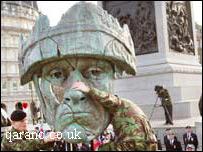 On the evening of Monday 21 May 2007 at 9pm BBC 2 broadcasted a documentary about former soldiers, sailors and airmen who were injured or disabled during their service career. The presenter was journalist Tim Samuels and he set out to bring to the attention of BBC2 viewers the after care of these servicemen and servicewomen, some of whom had served in The Falklands Campaign, The First Gulf War and during peacekeeping roles in Belize and Iraq. They included former Ghurkhas. The episode was called The Battle of Trafalgar Square.
Together the veterans formed a platoon with the mission to erect a statue of the face of a wounded soldier at Trafalgar Square in London, in front of Nelson's column. The former war heroes and soldiers wore army fatigue combats and the respective berets of their former corps or regiments.
Part of the filming took place in Royal Hospital Haslar in Gosport as the last military to close in the UK. Other filming took place at Selly Oak NHS Hospital in Birmingham which now treats service personnel.
The Abandoned Soldier
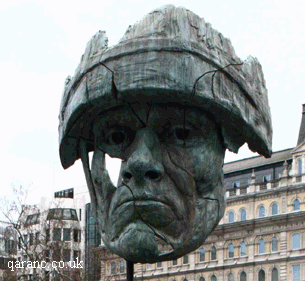 The statue was named The Abandoned Soldier and this original art work could be seen in 2007 at the care home of Combat Stress which is a charity that supports soldiers
who are physically and mentally scarred by the effects of war. Their website can be found at www.combatstress.org.uk
The statue was named The Abandoned Soldier and this original art work could be seen in 2007 at the care home of Combat Stress which is a charity that supports soldiers
who are physically and mentally scarred by the effects of war. Their website can be found at www.combatstress.org.uk
Read more about The Abandoned Soldier on the new QARANC The Abandoned Soldier page.
Royal Hospital Haslar
Haslar Road
Gosport
Hampshire
PO12 2AA
The photo of Haslar VADS below were found in some books by Gillian James Books which may have belonged to Eleaner Suffolk who served as a VAD in Haslar in 1943, though the back of the photo has written Isle of Man.
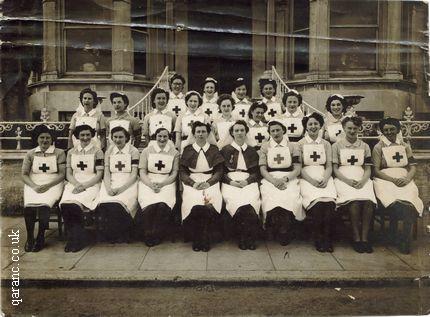
As well as the Haslar VADS photograph there was a Ceylon Colombo swimming club membership card for 1946 and a hand written note about the abbreviations and meanings of Naval words. There was also a typed production note aof the Haslar VADS play, Nine Till Six.
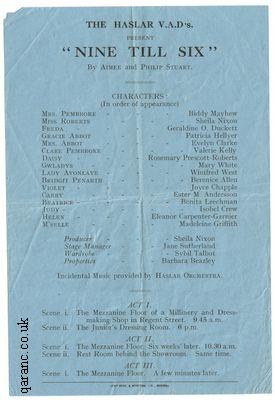
It reads:
The Haslar V.A.D.'s
Present
Nine Till Six
By Aimee and Philip Stuart
Characters
In order of appearance
Mrs Pembroke...Biddy Mayhew
Miss Roberts...Sheila Nixon
Freda...Geraldine O Duckett
Gracie Abbot...Patricia Helyer
Mrs Abbot...Evelyn Clarke
Clare Pembroke...Valerie Kelly
Daisy...Rosemary Prescott-Roberts
Gwladys...Mary White
Lady Avonlaye...Winifred West
Bridgit Penarth...Berenice Allen
Violet...Joyce Chapple
Carry...Ester M. Andersson
Beatrice...Benita Leechman
Judy...Isobel Crew
Helen...Eleanor Carpenter-Garnier
M'selle...Madeleine Griffith
Producer...Sheila Nixon
Stage Manager...Jane Sutherland
Wardrobe...Sybil Talbot
Properties...Barbara Beazley
Incidental Music provided by Haslar Orchestra
Act I
Scene i. The Mezzanine Floor of a Millinery and Dress-making shop in Regent Street. 9.45am.
Scene ii. The Junior's Dressing Room. 6pm.
Act II
Scene i. The Mezzanine Floor. Six weeks' later. 10.30am.
Scene ii. Rest Room behind the Showroom. Same time.
Act III
Scene i. The Mezzanine Floor. A few minutes later.
Nelson's Hospital: A Time Team Special
Nelson's Hospital: A Time Team Special was broadcast on Channel 4 on the 17 May 2010 at 9pm. Nelson's Hospital: A Time Team Special followed the work of Tony Robinson and a team of Archaeologists from Cranfield University who were excavating the Royal Haslar Hospital paddock where injured Royal Navy sailors from the Battle of Trafalgar who later died at Haslar Hospital were buried. This field is behind the Royal Hospital Haslar and is expected to be redeveloped. Unfortunately the graves had no headstones and there are no records for the plot. When the Archaeologists from Cranfield University came to unearth the graves there was no full surviving coffins nor name plates. Those sailor bodies that were exhumed were later buried with full military honours.
Nelson's Hospital: A Time Team Special on Channel4 also saw Tony Robinson and his team discuss the work of Naval Physician Dr. James Lind such as his improvements of hospitals and care of patients, and his experiments and research into the illnesses faced by seamen such as scurvy.
For those watching Nelson's Hospital: A Time Team Special Tony Robinson over pronounced the a's in Haslar so that it was pronounced Haslaaar. Qaranc.co.uk are not sure if this is the correct way to pronounce Haslar but have never encountered this way of saying the name of the hospital. We have heard from locals who tell us that Haslar should be pronounced as Hazzler.
***********************************************
A reader of qaranc.co.uk is seeking information about a relative. He requests:
I have an ancestor, Able Seaman Alexander Broomfield, who wrote to his father at age 28 from Haslar Hospital in 1856:
“We were drilling at Spithead when I fell from aloft but happily for me I fell overboard striking myself outside of the ship but I was soon picked up by the boats quite insensible.
I did not know what had happened till 2 days after when I found myself in Haslar Hospital. I have been confined to my bed this 16 days but thank God I am recovering.”
He died two years later in 1857 in Melville Hospital, (Naval), almost certainly from the after effects of the fall. He had been previously awarded a Royal Humane Society medal for saving his ship’s Captain from drowning when their boat capsized half a mile offshore.
It was only after 1873 that every man in the Navy had a Service Record. The only way to find a sailor’s service is to consult the Ships Description Book for the last ship he served on. Besides providing age, place of birth, physical description, it also provides a list of all the ships he had served on to that date.
Thus my request: I am wondering whether there would be records from that time which would name his ship at the time of his accident?
If you can help please contact Qaranc.co.uk and we shall pass on the information.

Former Royal Air Force Regiment Gunner Jason Harper witnesses a foreign jet fly over his Aberdeenshire home. It is spilling a strange yellow smoke. Minutes later, his wife, Pippa, telephones him, shouting that she needs him. They then get cut off. He sets straight out, unprepared for the nightmare that unfolds during his journey. Everyone seems to want to kill him.
Along the way, he pairs up with fellow survivor Imogen. But she enjoys killing the living dead far too much. Will she kill Jason in her blood thirst? Or will she hinder his journey through this zombie filled dystopian landscape to find his pregnant wife?
The Fence is the first in this series of post-apocalyptic military survival thrillers from the torturous mind of former British army nurse, now horror and science fiction novel writer, C.G. Buswell.
Download Now.
Buy the Paperback.
If you would like to contribute to this page, suggest changes or inclusions to this website or would like to send me a photograph then please e-mail me.

Free Book.
The death of the Brotherhood will be avenged.
RAF gunner Jason Harper and a team of Special Air Service operators are enraged after the death of their brothers by a terrorist drone strike. They fly into south-eastern Yemen on a Black-op mission to gather intelligence and avenge the death of their comrades.
Can they infiltrate the Al-Queda insurgents' camp, stay undetected, and call down their own drone missile strike and get home safely?
Will they all survive to fight another day?
Operation Wrath is a free, fast-paced adventure prequel to the non-stop action The Fence series by military veteran author C.G. Buswell.
Download for free on any device and read today.
This website is not affiliated or endorsed by The Queen Alexandra's Royal Army Nursing Corps (QARANC) or the Ministry of Defence.
» Contact
» Advertise
» QARANC Poppy Pin
» Poppy Lottery
» The Grey Lady Ghost of the Cambridge Military Hospital Novel - a Book by CG Buswell
» The Drummer Boy Novel
» Regimental Cap Badges Paintings
Read our posts on:
Offers
» Army Discounts
» Claim Uniform Washing Tax Rebate For Laundry
» Help For Heroes Discount Code
» Commemorative Cover BFPS 70th anniversary QARANC Association

Present Day
» Become An Army Nurse
» Junior Ranks
» Officer Ranks
» Abbreviations
» Nicknames
» Service Numbers
Ministry of Defence Hospital Units
» MDHU Derriford
» MDHU Frimley Park
» MDHU Northallerton
» MDHU Peterborough
» MDHU Portsmouth
» RCDM Birmingham
» Army Reserve QARANC
Photos
» Florence Nightingale Plaque
» Photographs
Uniform
» Why QA's Wear Grey
» Beret
» Army Medical Services Tartan
» First Time Nurses Wore Trousers AV Anti Vermin Battledress
» TRF Tactical Recognition Flash Badge
» Greatcoat TFNS
» Lapel Pin Badge

» Army School of Psychiatric Nursing Silver Badge
» Cap Badge
» Corps Belt
» ID Bracelet
» Silver War Badge WWI
» Officer's Cloak
» QAIMNSR Tippet
» QAIMNS and Reserve Uniform World War One
» Officer Medal
» Hospital Blues Uniform WW1
Events
» Armed Forces Day
» The Nurses General Dame Maud McCarthy Exhibition Oxford House London
» Edinburgh Fringe Stage Play I'll Tell You This for Nothing - My Mother the War Hero
» Match For Heroes
» Recreated WWI Ward
» Reunions
» Corps Day
» Freedom of Rushmoor
» Re-enactment Groups
» Military Events
» Remembrance
» AMS Carol Service
» QARANC Association Pilgrimage to Singapore and Malaysia 2009
» Doctors and Nurses at War
» War and Medicine Exhibition
» International Conference on Disaster and Military Medicine DiMiMED
» QA Uniform Exhibition Nothe Fort Weymouth
Famous QA's
» Dame Margot Turner
» Dame Maud McCarthy
» Lt Col Maureen Gara
» Military Medal Awards To QAs
» Moment of Truth TV Documentary
» Sean Beech
» Staff Nurse Ella Kate Cooke
Nursing
Nursing Jobs Vacancies UK
International Nurses Day
International Midwife Day
Info
» Search
» Site Map
» Contact
» Other Websites
» Walter Mitty Military Imposters
» The Abandoned Soldier
We are seeking help with some answers to questions sent by readers. These can be found on the Army Nursing page.
» Find QA's
» Jokes
» Merchandise
» Mugs
» Personalised Poster
» Poppy Badges
» Stamp
» Teddy Bears
» Pin Badges
» Wall Plaques
» Fridge Magnet