


» Site Map
» Home Page
Historical Info
» Find Friends - Search Old Service and Genealogy Records
» History
» QAIMNS for India
» QAIMNS First World War
» Territorial Force Nursing Service TFNS
» WW1 Soldiers Medical Records
» Field Ambulance No.4
» The Battle of Arras 1917
» The German Advance
» Warlencourt Casualty Clearing Station World War One
» NO 32 CCS Brandhoek - The Battle of Passchendaele
» Chain of Evacuation of Wounded Soldiers
» Allied Advance - Hundred Days Offensive
» Life After War
» Auxiliary Hospitals
» War Graves Nurses
» Book of Remembrance
» Example of Mentioned in Despatches Letter
» Love Stories
» Autograph Book World War One
» World War 1 Letters
» Service Scrapbooks
» QA World War Two
» Africa Second World War
» War Diaries of Sisters
» D Day Normandy Landings
» Belsen Concentration Camp
» Italian Sailor POW Camps India World War Two
» VE Day
» Voluntary Aid Detachment
» National Service
» Korean War
» Gulf War
» Op Telic
» Op Gritrock
» Royal Red Cross Decoration
» Colonels In Chief
» Chief Nursing Officer Army
» Director Army Nursing Services (DANS)
» Colonel Commandant
» Matrons In Chief (QAIMNS)
Follow us on Twitter:

» Grey and Scarlet Corps March
» Order of Precedence
» Motto
» QA Memorial National Arboretum
» NMA Heroes Square Paving Stone
» NMA Nursing Memorial
» Memorial Window
» Stained Glass Window
» Army Medical Services Monument
» Recruitment Posters
» QA Association
» Standard
» QA and AMS Prayer and Hymn
» Books
» Museums
Former Army Hospitals
UK
» Army Chest Unit
» Cowglen Glasgow
» CMH Aldershot
» Colchester
» Craiglockhart
» DKMH Catterick
» Duke of Connaught Unit Northern Ireland
» Endell Street
» First Eastern General Hospital Trinity College Cambridge
» Ghosts
» Hospital Ghosts
» Haslar
» King George Military Hospital Stamford Street London
» QA Centre
» QAMH Millbank
» QEMH Woolwich
» Medical Reception Station Brunei and MRS Kuching Borneo Malaysia
» Military Maternity Hospital Woolwich
» Musgrave Park Belfast
» Netley
» Royal Chelsea Hospital
» Royal Herbert
» Royal Brighton Pavilion Indian Hospital
» School of Physiotherapy
» Station Hospital Ranikhet
» Station Hospital Suez
» Tidworth
» Ghost Hunt at Tidworth Garrison Barracks
» Wheatley
France
» Ambulance Trains
» Hospital Barges
» Ambulance Flotilla
» Hospital Ships
Germany
» Berlin
» Hamburg
» Hannover
» Hostert
» Iserlohn
» Munster
» Rinteln
» Wuppertal
Cyprus
» TPMH RAF Akrotiri
» Dhekelia
» Nicosia
Egypt
» Alexandria
China
» Shanghai
Hong Kong
» Bowen Road
» Mount Kellett
» Wylie Road Kings Park
Malaya
» Kamunting
» Kinrara
» Kluang
» Penang
» Singapore
» Tanglin
» Terendak
Overseas Old British Military Hospitals
» Belize
» Falklands
» Gibraltar
» Kaduna
» Klagenfurt
» BMH Malta
» Nairobi
» Nepal
Middle East
» Benghazi
» Tripoli
Field Hospitals
» Camp Bastion Field Hospital and Medical Treatment Facility MTF Helmand Territory Southern Afghanistan
» TA Field Hospitals and Field Ambulances
BMH Malta
Information and history of BMH Malta including during WWII and the Messina earthquake aid
In the early years of BMH Malta QAs had to help improve the sanitation of the environment. This helped to overcome many diseases including the rife Malta Fever which was traced back to a fever bacillus in goats milk. The incidence of Malta Fever ceased once soldiers were educated and banned from buying goats milk (cited in the book Queen Alexandra's Royal Army Nursing Corps (Famous Regts. S)
 by Juliet Piggott).
World War One
During World War One the wounded from the Gallipoli campaign of 1915 were transferred to Malta.
Follow us on Facebook, Instagram and Twitter.

My PTSD assistance dog, Lynne, and I have written a book about how she helps me with my military Post Traumatic Stress Disorder, anxiety, and depression. I talk about my time in the QAs and the coping strategies I now use to be in my best health.
Along the way, I have had help from various military charities, such as Help for Heroes and The Not Forgotten Association and royalties from this book will go to them and other charities like Bravehound, who paired me with my four-legged best friend.
I talk openly about the death of my son by suicide and the help I got from psychotherapy and counselling and grief charities like The Compassionate Friends.
The author, Damien Lewis, said of Lynne:
"A powerful account of what one dog means to one man on his road to recovery. Both heart-warming and life-affirming. Bravo Chris and Lynne. Bravo Bravehound."
Download.
Buy the Paperback.
This beautiful QARANC Poppy Pin Badge is available from the Royal British Legion Poppy Shop.
For those searching military records, for information on a former nurse of the QAIMNS, QARANC, Royal Red Cross, VAD and other nursing organisations or other military Corps and Regiments, please try Genes Reunited where you can search for ancestors from military records, census, birth, marriages and death certificates as well as over 673 million family trees. At GenesReunited it is free to build your family tree online and is one of the quickest and easiest ways to discover your family history and accessing army service records.
More Information.
Another genealogy website which gives you access to military records and allows you to build a family tree is Find My Past which has a free trial.
Denis A. Darmanin has published an article in the Malta Times about the military hospitals built during the Great War. This includes tented hospitals, those converted from existing buildings an those especially build by Royal Engineers, Maltese soldiers and even the RAMC. These Malta military hospitals of World War One were needed to care for servicemen wounded during the campaign in the Dardanelles, mainly in the Gallipoli and Salonika theatres.
Denis has added a photo of a plaque which has the Queen Alexandra's Imperial Military Nursing Service Reserve (QAIMNS{R}) badge. For more information visit
www.timesofmalta.com/life/view/20100504/news/a-forgotten-memorial
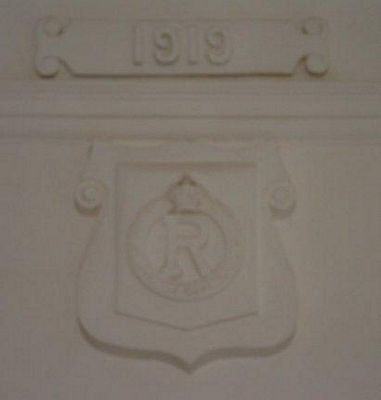
Denis was kind enough to send a photo of a QAIMNS(R) plaque, taken through protective glass pane, at the former Officers Mess at St. David's Barracks, Mtarfa (pronounced Imtarfa), in Malta. It is very near to the former Sir David Bruce Hospital, Isolation Hospital and the Nurses Quarters.
The book Sub Cruce Candida: A Celebration of One Hundred Years of Army Nursing
 has photos of BMH Malta which includes group photos of the QAIMNS sisters, exterior shots of the building and some patients. There are also photographs of the Queen's
birthday parade at BMH Malta in the early 1950s.
has photos of BMH Malta which includes group photos of the QAIMNS sisters, exterior shots of the building and some patients. There are also photographs of the Queen's
birthday parade at BMH Malta in the early 1950s.
Second World War Malta
During the Second World War Malta was heavy bombed by the Germans in the years 1940,1941 and 1942 in attempt to take control of the island. During the period from 1 January to the 24 July 1942 there was only one 24 hour period when no bombs from German or Italian planes fell (cited in the book Sisters In Arms: British Army Nurses Tell Their Story
 ).
Their main targets were the airfield and the naval base and the Maltese people became quite used to seeing the Spitfires flying off to defend their island against the enemy
Messerschmitts and Junker planes. BMH Malta was located on a hill that overlooked the dockyard and the QAs at BMH Malta became used to the air battles. Prior to the arrival of a squadron of Spitfires Malta was defended by just four Sea Gladiator biplane aircraft flown by RAF pilots.
).
Their main targets were the airfield and the naval base and the Maltese people became quite used to seeing the Spitfires flying off to defend their island against the enemy
Messerschmitts and Junker planes. BMH Malta was located on a hill that overlooked the dockyard and the QAs at BMH Malta became used to the air battles. Prior to the arrival of a squadron of Spitfires Malta was defended by just four Sea Gladiator biplane aircraft flown by RAF pilots.

Former Royal Air Force Regiment Gunner Jason Harper witnesses a foreign jet fly over his Aberdeenshire home. It is spilling a strange yellow smoke. Minutes later, his wife, Pippa, telephones him, shouting that she needs him. They then get cut off. He sets straight out, unprepared for the nightmare that unfolds during his journey. Everyone seems to want to kill him.
Along the way, he pairs up with fellow survivor Imogen. But she enjoys killing the living dead far too much. Will she kill Jason in her blood thirst? Or will she hinder his journey through this zombie filled dystopian landscape to find his pregnant wife?
The Fence is the first in this series of post-apocalyptic military survival thrillers from the torturous mind of former British army nurse, now horror and science fiction novel writer, C.G. Buswell.
Download Now.
Buy the Paperback.
If you would like to contribute to this page, suggest changes or inclusions to this website or would like to send me a photograph then please e-mail me.
No supplies could get through and for months the citizens were near to starvation. This affected hospital supplies and surgeons in Malta had to perform operations without gloves. The siege of Malta was over on the 3 November 1942and the island of Malta was awarded the George Cross for its national bravery by King George VI. By 1943 the Allies gained control of the area and QAs arrived in Malta aboard Hospital Ships. Wounded servicemen were taken to Egypt to be nursed back to health (cited in the book Women Who Went to War
 by Eric Taylor).
A letter from a Matron to the Matron In Chief can be read in Grey and Scarlet : letters from the war areas by army sisters on active service
 where she writes of her journey to Malta on the Nevasa along with other QAs who were posted to the Military Hospital at Imtarfa and the Military Families Hospital. She writes of the early days of peace in Malta prior to WWII. Then she describes the taking over of Imtarfa Barracks after the naval hospital in Beghi closed so that it could be converted into a larger hospital to take military, naval, RAF and dockyard patients.
There is a reference in Grey and Scarlet : letters from the war areas by army sisters on active service
to the original Military Hospital and the Barrack Hospital combining in September 1939 to form the General Hospital. She continues by discussing the operating theatres, bombardments, the type of casualties including those from the Illustrious, re-inforcements of RAMC arriving, the opening of 39th General Hospital and its bombing, and the construction of the rock shelter by the sappers of the RE.
80th Anniversary of the Award of the George Cross to Malta

To mark the 80th anniversary, BFPS has produced, in conjunction with the George Cross Island Association (GCIA), a commemorative cover to be issued on the 15th of April 2022.
Images on the cover show the Island of Malta and the George Cross medal. Alongside these are the crest of Malta and the logo of the GCIA. A 1st class stamp bearing the image of H.M. The Queen will be cancelled by the exclusive BFPS 3238 special handstamp specially designed for the occasion.
A standard unsigned version will cost £8 each whilst a numbered limited edition of 80 signed by the Honourable Tim Lewin (Son of the Late Admiral of the Fleet Lord Lewin and organiser of the London Maltese Siege Memorial) will cost £16 each.
The commemorative covers include an information insert and will be presented in a protective cellophane sleeve making a very collectable souvenir of the anniversary.
Profits from the sale of these covers, after production costs, will be donated to the GCIA Association to support their work.
The covers can be ordered from the BFPS online shop www.bfps.org.uk or by post by sending a cheque (payable to "BFPS CIC") to BFPS, The Old Post Office, Links Place, Elie, LEVEN, KY9 1AX.
Imtarfa Military Hospital
Imtarfa Military Hospital adapted its role to meet the medical and nursing needs of under seiged Malta. For example nurses became Casualty Clearing Station (CCS) staff and nursed in the battlefield where they would treat wounded pilots and soldiers.
The Matron of the 1200 bed Imtarfa Military Hospital was Maud Buckingham who drew on her experience from the First World War. Matron Buckingham wrote letters to the QAIMNS Matron in Chief, Dame Katherine Jones, during the Second World War. Extracts are cited in the book Sisters In Arms: British Army Nurses Tell Their Story
.
Maud Buckingham
Matron Maud Buckingham remained in post well after the siege of Malta ended and did not leave the Island until July 1943. She had served three years in Malta. During this time she wrote personally to each bereaved family and received many letters of thanks back from mothers for her letter of condolence. Examples of these are cited in the book Sisters In Arms: British Army Nurses Tell Their Story
. Matron Maud Buckingham received the Royal Red Cross (RRC) medal.
Lt Clark Gable
Food remained in short supply and QA Sister Marjorie Bennett in the book Women Who Went to War
by Eric Taylor) describes a typical midday meal as hard cheese, dates, army biscuits and a mug of tea. She also describes going to an American dance because the food was better and dancing with a sweaty officer from whom she declined a second dance despite him being an excellent dancer because he left sweat marks on her white dress. This turned out to be Lieutenant Clark Gable and she never forgot turning down the handsome film star of Gone With The Wind! Lt Clark Gable was a member of the US Army Air Corps flying in the Flying Fortress planes.
Messina Sicily Earthquake 1908
Malta suffered from an earth tremor and then a tidal wave on the 28 December 1908. The coastal town of Messina in Sicily had been destroyed by an earthquake. The King of Italy sought help from Britain and a Field Ambulance section of RAMC (Royal Army Medical Corps) with two members of the QAIMNS (Queen Alexandra's Imperial Military Nursing Service) and a Stationary Hospital were transported to Messina in Sicily by the Royal Navy. They took with them ten days supplies and rations.
Once in Sicily the RAMC and the QA Sisters cared for survivors of the Messina Sicily Earthquake 1908 on board HMS Minerva and HMS Duncan which were set up as dressing stations. The Stationary Hospital was set up in nearby Catona in what was a market place on the 2 January 1909. The QAs worked with two volunteer nurses from Malta until the 15 January 1909 when all four nurses returned to Malta. There is more written about the Messina Sicily Earthquake 1908 in the book Queen Alexandra's Royal Army Nursing Corps (Famous Regts. S)
by Juliet Piggott).
St George's Hospital Malta
Vera Brittain, the First World War poet and VAD (Voluntary Aid Detachment) nursed at St George's Hospital Malta and her war diaries can be read in Women in the War Zone: Hospital Service in the First World War

In his book A Few Deeds Short of a Hero
 Robert Widders writes about his time at the fort HMS St Angelo in Malta prior to boarding HMS Grenville and his discovery of the local beer, Hop Leaf, and the bars of the Gut alley in Valetta.
Imtarfa Military Cemetery Malta Lieutenant Eileen Bramwell QARANC, Lance Corporal P.W. Francis and Maria Dolores Elizabeth Knight Graves.
QARANC.co.uk would love to expand this page about BMHMalta with more details about this former army hospital and include a photograph. If you are a former or serving member of the Queen Alexandra's Royal Army Nursing Corps we would love your help.
If you would like to contribute any info, photographs or share your memories of BMH Malta then please contact me.
Retired RAMC GP Colonel Walter Bonnici runs the website www.maltaramc.com which goes into more detail about the British Army Medical Services in Malta including information about the RAMC and QA staff who served there, the hospitals and the diseases and epidemics they encountered. It is full of some rare photos of the buildings and staff.
Free Book.
The death of the Brotherhood will be avenged.
RAF gunner Jason Harper and a team of Special Air Service operators are enraged after the death of their brothers by a terrorist drone strike. They fly into south-eastern Yemen on a Black-op mission to gather intelligence and avenge the death of their comrades.
Can they infiltrate the Al-Queda insurgents' camp, stay undetected, and call down their own drone missile strike and get home safely?
Will they all survive to fight another day?
Operation Wrath is a free, fast-paced adventure prequel to the non-stop action The Fence series by military veteran author C.G. Buswell.
Download for free on any device and read today.
This website is not affiliated or endorsed by The Queen Alexandra's Royal Army Nursing Corps (QARANC) or the Ministry of Defence.
» Contact
» Advertise
» QARANC Poppy Pin
» Poppy Lottery
» The Grey Lady Ghost of the Cambridge Military Hospital Novel - a Book by CG Buswell
» The Drummer Boy Novel
» Regimental Cap Badges Paintings
Read our posts on:
Offers
» Army Discounts
» Claim Uniform Washing Tax Rebate For Laundry
» Help For Heroes Discount Code
» Commemorative Cover BFPS 70th anniversary QARANC Association

Present Day
» Become An Army Nurse
» Junior Ranks
» Officer Ranks
» Abbreviations
» Nicknames
» Service Numbers
Ministry of Defence Hospital Units
» MDHU Derriford
» MDHU Frimley Park
» MDHU Northallerton
» MDHU Peterborough
» MDHU Portsmouth
» RCDM Birmingham
» Army Reserve QARANC
Photos
» Florence Nightingale Plaque
» Photographs
Uniform
» Why QA's Wear Grey
» Beret
» Army Medical Services Tartan
» First Time Nurses Wore Trousers AV Anti Vermin Battledress
» TRF Tactical Recognition Flash Badge
» Greatcoat TFNS
» Lapel Pin Badge

» Army School of Psychiatric Nursing Silver Badge
» Cap Badge
» Corps Belt
» ID Bracelet
» Silver War Badge WWI
» Officer's Cloak
» QAIMNSR Tippet
» QAIMNS and Reserve Uniform World War One
» Officer Medal
» Hospital Blues Uniform WW1
Events
» Armed Forces Day
» The Nurses General Dame Maud McCarthy Exhibition Oxford House London
» Edinburgh Fringe Stage Play I'll Tell You This for Nothing - My Mother the War Hero
» Match For Heroes
» Recreated WWI Ward
» Reunions
» Corps Day
» Freedom of Rushmoor
» Re-enactment Groups
» Military Events
» Remembrance
» AMS Carol Service
» QARANC Association Pilgrimage to Singapore and Malaysia 2009
» Doctors and Nurses at War
» War and Medicine Exhibition
» International Conference on Disaster and Military Medicine DiMiMED
» QA Uniform Exhibition Nothe Fort Weymouth
Famous QA's
» Dame Margot Turner
» Dame Maud McCarthy
» Lt Col Maureen Gara
» Military Medal Awards To QAs
» Moment of Truth TV Documentary
» Sean Beech
» Staff Nurse Ella Kate Cooke
Nursing
Nursing Jobs Vacancies UK
International Nurses Day
International Midwife Day
Info
» Search
» Site Map
» Contact
» Other Websites
» Walter Mitty Military Imposters
» The Abandoned Soldier
We are seeking help with some answers to questions sent by readers. These can be found on the Army Nursing page.
» Find QA's
» Jokes
» Merchandise
» Mugs
» Personalised Poster
» Poppy Badges
» Stamp
» Teddy Bears
» Pin Badges
» Wall Plaques
» Fridge Magnet