


» Site Map
» Home Page
Historical Info
» Find Friends - Search Old Service and Genealogy Records
» History
» QAIMNS for India
» QAIMNS First World War
» Territorial Force Nursing Service TFNS
» WW1 Soldiers Medical Records
» Field Ambulance No.4
» The Battle of Arras 1917
» The German Advance
» Warlencourt Casualty Clearing Station World War One
» NO 32 CCS Brandhoek - The Battle of Passchendaele
» Chain of Evacuation of Wounded Soldiers
» Allied Advance - Hundred Days Offensive
» Life After War
» Auxiliary Hospitals
» War Graves Nurses
» Book of Remembrance
» Example of Mentioned in Despatches Letter
» Love Stories
» Autograph Book World War One
» World War 1 Letters
» Service Scrapbooks
» QA World War Two
» Africa Second World War
» War Diaries of Sisters
» D Day Normandy Landings
» Belsen Concentration Camp
» Italian Sailor POW Camps India World War Two
» VE Day
» Voluntary Aid Detachment
» National Service
» Korean War
» Gulf War
» Op Telic
» Op Gritrock
» Royal Red Cross Decoration
» Colonels In Chief
» Chief Nursing Officer Army
» Director Army Nursing Services (DANS)
» Colonel Commandant
» Matrons In Chief (QAIMNS)
Follow us on Twitter:

» Grey and Scarlet Corps March
» Order of Precedence
» Motto
» QA Memorial National Arboretum
» NMA Heroes Square Paving Stone
» NMA Nursing Memorial
» Memorial Window
» Stained Glass Window
» Army Medical Services Monument
» Recruitment Posters
» QA Association
» Standard
» QA and AMS Prayer and Hymn
» Books
» Museums
Former Army Hospitals
UK
» Army Chest Unit
» Cowglen Glasgow
» CMH Aldershot
» Colchester
» Craiglockhart
» DKMH Catterick
» Duke of Connaught Unit Northern Ireland
» Endell Street
» First Eastern General Hospital Trinity College Cambridge
» Ghosts
» Hospital Ghosts
» Haslar
» King George Military Hospital Stamford Street London
» QA Centre
» QAMH Millbank
» QEMH Woolwich
» Medical Reception Station Brunei and MRS Kuching Borneo Malaysia
» Military Maternity Hospital Woolwich
» Musgrave Park Belfast
» Netley
» Royal Chelsea Hospital
» Royal Herbert
» Royal Brighton Pavilion Indian Hospital
» School of Physiotherapy
» Station Hospital Ranikhet
» Station Hospital Suez
» Tidworth
» Ghost Hunt at Tidworth Garrison Barracks
» Wheatley
France
» Ambulance Trains
» Hospital Barges
» Ambulance Flotilla
» Hospital Ships
Germany
» Berlin
» Hamburg
» Hannover
» Hostert
» Iserlohn
» Munster
» Rinteln
» Wuppertal
Cyprus
» TPMH RAF Akrotiri
» Dhekelia
» Nicosia
Egypt
» Alexandria
China
» Shanghai
Hong Kong
» Bowen Road
» Mount Kellett
» Wylie Road Kings Park
Malaya
» Kamunting
» Kinrara
» Kluang
» Penang
» Singapore
» Tanglin
» Terendak
Overseas Old British Military Hospitals
» Belize
» Falklands
» Gibraltar
» Kaduna
» Klagenfurt
» BMH Malta
» Nairobi
» Nepal
Middle East
» Benghazi
» Tripoli
Field Hospitals
» Camp Bastion Field Hospital and Medical Treatment Facility MTF Helmand Territory Southern Afghanistan
» TA Field Hospitals and Field Ambulances
Hospital Ships
Information about Hospital Ships used by the British Army during the World Wars and the Falklands War:
These have been used by the military to evacuate and treat army personnel until they could be transferred to military hospitals and treatment centres. The first recorded was the Red Rover in 1860 during the American Civil War. British forces have also used them to medically or surgically treat members of the Army, Navy and RAF. They have also been used for humanitarian operations throughout the world and are often called Mercy Ships for this reason. Other names for them include Navy Ambulances or Floating Ambulances.

Though predominately staffed by members of QARNNS and QARNNS(R) - the Queen Alexandra's Royal Naval Nursing Service and the Reserves members of the QAIMNS have nursed aboard hospital ships alongside their Navy comrades.
The book The Roses of No Man's Land
 by Lyn MacDonald has several photos of the Hospital Ship Essequibo and the QA Sisters who served aboard her tending the sick and wounded from Gallipoli.
 Grey and Scarlet : letters from the war areas by army sisters on active service
 has extracts of the war diaries of Nursing Sisters who served aboard hospital ships and hospital carriers during the Second World War. This included Hospital Carrier Isle of Guernsey during the evacuation from France in 1940.
Follow us on Facebook, Instagram and Twitter.
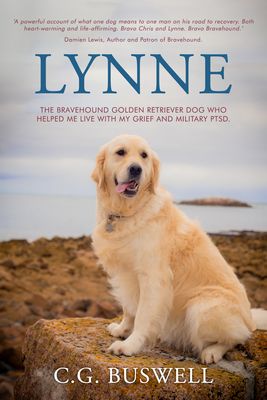
My PTSD assistance dog, Lynne, and I have written a book about how she helps me with my military Post Traumatic Stress Disorder, anxiety, and depression. I talk about my time in the QAs and the coping strategies I now use to be in my best health.
Along the way, I have had help from various military charities, such as Help for Heroes and The Not Forgotten Association and royalties from this book will go to them and other charities like Bravehound, who paired me with my four-legged best friend.
I talk openly about the death of my son by suicide and the help I got from psychotherapy and counselling and grief charities like The Compassionate Friends.
The author, Damien Lewis, said of Lynne:
"A powerful account of what one dog means to one man on his road to recovery. Both heart-warming and life-affirming. Bravo Chris and Lynne. Bravo Bravehound."
Download.
Buy the Paperback.
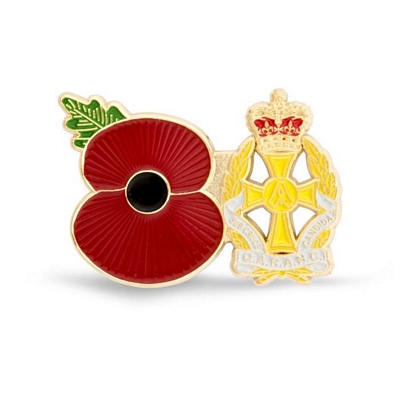
This beautiful QARANC Poppy Pin Badge is available from the Royal British Legion Poppy Shop.
For those searching military records, for information on a former nurse of the QAIMNS, QARANC, Royal Red Cross, VAD and other nursing organisations or other military Corps and Regiments, please try Genes Reunited where you can search for ancestors from military records, census, birth, marriages and death certificates as well as over 673 million family trees. At GenesReunited it is free to build your family tree online and is one of the quickest and easiest ways to discover your family history and accessing army service records.
More Information.
Another genealogy website which gives you access to military records and allows you to build a family tree is Find My Past which has a free trial.
World War I Hospital Ships
The hospital ships of World War I were mostly converted passenger liners. Examples of these are the RMS Aquitania and the His Majesty's Hospital Ship (HMHS) Britannic. Members of the Queen Alexandra's Imperial Military Nursing Service (QAIMNS) served aboard them on the wards. Others included the hospital ship Abessieh, Hospital Ship Anglia, HS Devanha, HS Gloucester Castle, HS Somersetshire, HS Salta, HS Galeka, HS Caledonia and His Majesty's Hospital Ship Neuralia.
Britannic
Donald Johnson served with the RAMC and has kindly provided the additional information about the Britannic:
There were the major ones bearing proud and famous names such as the Olympic, the Mauretania, the Aquitania and the ill-fated Britannic which was sunk when it stuck a mine just off Kea Island in the Aegian Sea on 21st November 1916, and sank in just 50 minutes.
She was the younger sister of Olympic and of the ill-fated Titanic and, when we realise that Titanic had a 300 feet long gash on her Starboard side which breached the first 5 of her water-tight compartments yet she survived for 2 hours and 40 minutes, when we consider the changes that were made to both Olympic and Britannic the difference in her survival is amazing and has led to a multitude of ideas many of them accusing Germany of evil acts and an equal number accusing Britain of breaching the Geneva Convention by the carrying of arms and explosives but neither is correct.
A thorough underwater study of the vessel by Dr Robert Ballard of the United States gave no evidence of a major explosion that would have occurred if explosives had been involved. What his studies showed was a double action of human error.
The ship was on her way to collect her 6th intake of over 3,000 casualties from the Dardanelles and Turkey when:
1. The striking was at 8.00 a.m., the time when the Engine and Boiler Room watches were being changed and to facilitate this, the water-tight doors at the ends of the Firemen's Tunnel (a water-tight passage that went from No. 1 water-tight compartment right through to No. 5 compartment) were open, and probably wedged, with the result that water entering No 1 compartment went straight through to No. 5 and destroyed the water-tight integrity of the entire vessel.
2. It was the final day of relaxed routine and it was breakfast time and the nursing staff had cleaned the wards and got everything ready prior to going for their final breakfast together, which they would not be able to do once they had patients aboard but, as nursing staff have done for years, they opened all the portholes (windows) to air the wards, and most probably wedged the doors open to get a through draft, both were actions that were prohibited in the theatre of war, and both were equally effective in destroying the water-tight integrity of the ship since those same doors were designed to be part of the water-tight integrity of the vessel.
However, the only casualties were the occupants of one lifeboat that, soon after its' launching, was sucked into the still turning propeller and all were killed.

Former Royal Air Force Regiment Gunner Jason Harper witnesses a foreign jet fly over his Aberdeenshire home. It is spilling a strange yellow smoke. Minutes later, his wife, Pippa, telephones him, shouting that she needs him. They then get cut off. He sets straight out, unprepared for the nightmare that unfolds during his journey. Everyone seems to want to kill him.
Along the way, he pairs up with fellow survivor Imogen. But she enjoys killing the living dead far too much. Will she kill Jason in her blood thirst? Or will she hinder his journey through this zombie filled dystopian landscape to find his pregnant wife?
The Fence is the first in this series of post-apocalyptic military survival thrillers from the torturous mind of former British army nurse, now horror and science fiction novel writer, C.G. Buswell.
Download Now.
Buy the Paperback.
If you would like to contribute to this page, suggest changes or inclusions to this website or would like to send me a photograph then please e-mail me.
Cunard Liners
Cunard Liners had the esteem of holding the Blue Riband award for the fastest ships to cross the Atlantic until Germany were honoured with the award in 1898 for the ship Kaiser Wilhelm der Grosse. They kept hold of the Blue Riband award for several years with liners such as the Deutschland and the Kronprinz Wilhelm. As a result Britain subsidised the building of faster liners with Cunard on the understanding that they would be used as troop ships in the event of a war. This resulting in the building of turbine engine powered liners called the Mauretania and then the Lusitania which was launched in 1907. Cunard then developed a liner with even greater speeds, the Aquitania, which was to be used as a hospital ship in World War One and then a troop ship in the Second World War.
Aquitania
The Aquitania was launched on the 21 April 1914 at the Clydebank shipyard of John Brown & Co. Ltd with a launch weight of 22,000 tons. It was so large that the Clyde had to be dredged and then widened. After sea tests the Aquitania made her maiden voyage on the 30 May from Liverpool to New York with Captain William Turner at the helm. The Aquitania could carry 3230 passengers and 972 crew. The Aquitania arrived at New York on the 5 June and her average speed was 23.1 knots.
The Aquitania patrolled the Western Approaches until she collided with a merchant vessel called Canadian and had to return to Liverpool for repairs. In June 1915 she was used as a troop ship between Britain and Gallipoli. This saw her converted to a hospital ship after her third voyage to Gallipoli. She was painted white with Red Crosses and served as HS Aquitania until April 1916 when she was converted back to civilian use. Though as these conversions were finished she was again requisitioned by the Government as a hospital ship.
In December 1917 the Aquitania was used as a troop ship for American forces to carry them to the American Expeditionary Force to Europe making nine voyages and carrying a total of 60,000 US troops. After the Armistice the Aquitania was used to take home Canadian servicemen and then was converted back to a liner at the Tyne from November 1919 to June 1920. Prior to her return to Cunard she was converted from coal firing to oil burning.
In September 1939 the Aquitania was once more requisitioned as a troop ship during World War Two. In the post war years she again repatriated overseas troops to their homelands. In 1948 she was placed under charter by the Canadian Government to sail between the UK and Canada and this contract ended in December 1949. Cunard surveyed their once great liner and former hospital ship and troop ship and found that she would have been too expensive to convert her to the standard of modern liners. The Aquitania was broken up at the ship breaking yard in Gareloch on the 21 February 1950.
St Margaret of Scotland
The Great War hospital ship St Margaret of Scotland was unusual in that it was staffed by Scottish doctors, nurses and orderlies because the nation had raised £22,000 to equip her (cited in It's a Long Way to Tipperary: British and Irish Nurses in the Great War
 by Yvonne McEwen).
Lifeboat Drills
As part of their role aboard QAs had to learn lifeboat drills in case their ship was sunk, damaged or hit a mine. This involved learning to row the large lifeboats so that they could do this competently during any evacuation. Most QAs wore bathing costumes under their ward dresses and uniforms whilst aboard. Whilst on the ships nursing and medical personnel would wear their lifebelts, only taking them off when asleep.
Survival Tips
Nurses also had to quickly learn survival tips for evacuating their patients when abandoning ship during a bombing or torpedo attack. For example a patient who had a wooden leg splint would have to have it removed before evacuation because should he go into the water the wood of the leg brace would float and cause his upper body and head to go under the water and could make him drown.
Burying The Deceased At Sea
A sad duty of the staff was having to ask the padre to perform a committal service after the death of a patient and help with burying the deceased at sea by sliding the shroud wrapped corpse over the side. Sadly many patients died aboard because of their extreme wounds, despite the excellent nursing and medical care.
The war diary of Sister Kathleen Mann who served aboard Hospital Ship Salta and then His Majesty's Australian Transport (HMAT) Ulysses, HMAT Marathon and HMT Devanha can be read in Women in the War Zone: Hospital Service in the First World War
 by Anne Powell. In it Sister Mann recalls:
We lost a patient this morning, after he had had two operations, poor boy, it was sad, only 24hrs, and he had been through so much (gas gangrene); it was horribly sudden. I witnessed a burial at sea for the first time that day. It was held on the end deck after lunch, the body being placed on a slanting board, covered with a union jack. The burial service was read by the Captain, there being no Padre; others attending were the OC Troops and some of the medical staff. It was most impressive and quite reverently done.
During World War I the QAs would cross the English Channel from France to Britain whilst caring for their wounded patients on the ward. Once at the port the military patients would be evacuated to the military hospitals.
Red Cross
To prevent bombing or being fired upon by planes, boats or submarines they are usually painted all white with a red cross on each side.There is usually an illuminated red cross on the deck. This affords the vessel, the patients and medical personnel and the crew protection under the Geneva convention. Unfortunately this did not save the Australian Hospital Ship Centaur during World War II which was sunk by a Japanese submarine on the 14 May 1943. Even during the Great War German U-boats targeted them. For example in March 1917 HS Asturias was torpedoed out off Start Point, South Devon on a voyage from Avonmouth to Southampton.
British Hospital Ships Destroyed By The Enemy
There were many British hospital ships destroyed or damaged by the enemy during the First World War. For example the hosp ship Rohilla was sunk near Whitby when sailing from the Firth of Forth to help evacuate wounded troops from Flanders who were evacuated to Dunkirk. Though the four QA sisters were safely rescued on the lifeboats many sick berth attendants died.
The Hospital Ship Gloucester Castle was torpedoed in the English Channel and the Matron, Alice Cashin, was awarded the Royal Red Cross (RRC) for her devotion to her patients and staff. There is more written on the Royal Red Cross Medal page.
2,261,502 wounded men returned to Britain from France aboard them and 29,000 returned aboard from Malta, the Middle East and Africa cited in the book The Roses of No Man's Land
by Lyn MacDonald.
There is a photo of the wreck of the Hospital Ship Rohilla in the book Sub Cruce Candida: A Celebration of One Hundred Years of Army Nursing
 .
.
HS Rohilla had left the port of Leith and was lost just off the Yorkshire coast. It was thought to have hit a mine but its sinking was more complex. Wartime restrictions made it very difficult for ships to navigate the open water especially with all shore lights extinguished and the navigation buoys silenced. This was the same down the coast and many navigation fixes were at best estimates. This placed the Rohilla quite off from where it was believed to be and her course took her over a treacherous patch of rock known locally as Whitby Rock. The scar extends some distance out to sea and it was this that the vessel struck although it can be appreciated why the captain thought the ship had struck a mine. The gale force conditions spelt the end for the former liner and troopship and over the course of that fateful weekend one can only imagine the horrors facing those stranded aboard Rohilla. (My thanks to author Colin Brittain for this information. Read more in his book Into the Maelstrom: The Wreck of HMHS "Rohilla"
 ).
).
Hospital Ship Salta
The Hospital Ship Salta was sunk on the 10 April 1917 with the loss of 52 lives which included a Matron, 3 Sisters and 4 Staff Nurses (cited in It's a Long Way to Tipperary: British and Irish Nurses in the Great War
by Yvonne McEwen).
Three are buried at Ste Marie Cemetery Le Havre Normandy France.
Hospital Ship Rewa
The Hospital Ship Rewa was sunk by a U boat off the Bristol Channel on the 4 January 1918 and four lives were lost.
Hospital Ship Warilda
The book The Roses of No Man's Land
by Lyn MacDonald describes the sinking of the Hospital Ship Warilda that was torpedoed after leaving Le Havre on its passage to Southampton on 3 August 1918 at 1:30am. There is an account by Sister Jean Calder of the QAIMNS(R) who knew many of the patients on board having nursed them at No. 2 General Hospital, Quai d'Escale, Le Havre and then settled them onboard the HS Warilda.
115 patients, one Nursing Sister and one RAMC Orderly were lost at sea when it was sunk.
Glenart Castle
In February the Glenart Castle was sunk in the Bristol Channel and 162 lives were lost which included 8 nurses, 7 Royal Army Medical Corps (RAMC) medical officers and 47 medical orderlies (cited in It's a Long Way to Tipperary: British and Irish Nurses in the Great War
by Yvonne McEwen).
The Matron of the Glenart Castle was
Miss Katy Beaufoy who was a veteran of the South African War.
HMHS China
 HMHS China served during the Great War. Crew from the ship hit a mine at Scapa Flow on the 10 August 1918. Four lives were lost which included dental surgeon and
Royal Navy officer Lieutenant Herbert Myers Marshall who was aged 23 years. Herbert Myers Marshall had only recently obtained the L.D.S. (Licentiate in Dental Surgery).
It is thought that the ship was moored in Scapa Flow, presumably at a safe anchorage, and the four who were killed had gone fishing in a whaler when it struck a mine.
HMHS China served during the Great War. Crew from the ship hit a mine at Scapa Flow on the 10 August 1918. Four lives were lost which included dental surgeon and
Royal Navy officer Lieutenant Herbert Myers Marshall who was aged 23 years. Herbert Myers Marshall had only recently obtained the L.D.S. (Licentiate in Dental Surgery).
It is thought that the ship was moored in Scapa Flow, presumably at a safe anchorage, and the four who were killed had gone fishing in a whaler when it struck a mine. In his memory Lt Marshall's parents, Septimus and Margaret Marshall, provided money to built the Marshall Memorial Hall in Sunderland. His memorial plaque is pictured above.
Qaranc.co.uk would like to thank Alan Vickers for this information.
Towards the end of the First World War many of them were painted grey so that enemy ships, planes and U-boats could not tell them apart from merchant ships in an attempt to stop them being targeted.
Usually they are stripped of any weaponry and war supplies other than medical treatment supplies though the Royal Fleet Auxiliary ship RFA Argus, an aviation training ship, did have armaments and when acting as a medical facility it was designated as a primary casualty receiving ship.
Second World War Hospital Ships
During the Second World War hospital ships continued to serve the British Army in evacuating the wounded and injured back to Britain. Their number were supplemented by Hospital Carriers which had a shallow draught and could go close inshore to facilitate swifter evacuation of casualties. They were assisted by water ambulances with flat bottoms that could go ashore and carry stretchers. Once again members of the QAIMNS nursed aboard these floating hospitals and again faced the dangers of war. For example whilst the hospital ship Maid of Kent and the HS Brighton were being loaded with patients they were bombed by enemy Stuker planes. Millions Like Us: Women's Lives in War and Peace 1939-1949
 has extracts from the war diary of a member of the QAIMNS who witnessed the sinking and the drowning of the 28 crew and medical staff at Dieppe Harbour.
Though the stoicism of the QAs, like their WWI colleagues, continued. The Soldier Magazine of July 1959 takes a quote from Grey Touched With Scarlet by Jean Bowden where a Matron and her Nursing Sisters were in the Mediterranean water after their ship was torpedoed. After several hours of clinging to wreckage they were brought ashore to Oran where their bedraggled uniforms were exchanged for men's clothing. Matron turned to her juniors and said; "Here borrow my comb, and try not to look like survivors!"
SS Ceramic
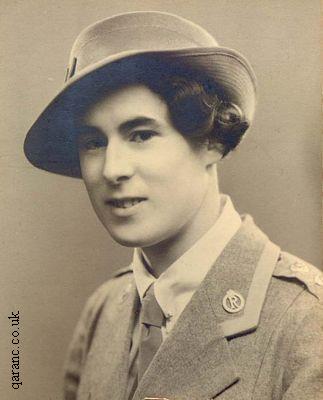
The photograph above is Sister Cecilia Maud Cribb who joined the nursing service during WW2. She was killed in 1942 when the troop ship, SS Ceramic, bound for Australia, was torpedoed by U-515 in the Atlantic Ocean west of the Azores. All but one of the 656 people on board were killed. Many members of the QAIMNS and RAMC were also lost at sea. Their details can be found on the website www.ssceramic.co.uk
Geneva Convention
International Law of the Geneva Convention ruled that they had to display electrically powered lights to illuminate their red cross signs on the sides of the ship and upon the deck. They were painted all white with a broad green stripe round the hull and red crosses painted on the sides to make them easily identified by U-boats, warships and enemy ships. This should have given enemy pilots and gunners far off recognition that this was not a legitimate target and was not to be fired upon. Sadly the reality was that they provided an easy target.
Grey and Scarlet : letters from the war areas by army sisters on active service
has a letter written by a Nursing Sister of the QAIMNS to the Matron In Chief describing her time in a lifeboat after being torpedoed. The Nursing Sister survived 12 days afloat and describes the sinking of the ship, the oil in the sea, the fires, the fear of being machine gunned and of the sharks that followed the lifeboat. Her letter from 1942 gives an account of how she managed to treat burns victims with a limited first aid kit, how the survivors coped with lack of water and food and overcoming the constant exposure to the sun and problems of sunburn and heat exhaustion.
Despite the odds though some patients and staff survived. For example Quiet Heroines: Nurses of the Second World War
 by Brenda McBryde tells of a surgeon who had just finished an amputation operation and had no alternative
than to bind the stump, secure the unconscious serviceman to a stretcher and hope he floated in the sea. Fortunately he did, was rescued and made a full recovery.
The Matron, Violet Innes QAIMNS was able to rescue some patients and get them aboard the safety of a lifeboat. It was said she did this calmly and without even getting her
veil soiled. She was later awarded an OBE.
by Brenda McBryde tells of a surgeon who had just finished an amputation operation and had no alternative
than to bind the stump, secure the unconscious serviceman to a stretcher and hope he floated in the sea. Fortunately he did, was rescued and made a full recovery.
The Matron, Violet Innes QAIMNS was able to rescue some patients and get them aboard the safety of a lifeboat. It was said she did this calmly and without even getting her
veil soiled. She was later awarded an OBE.
Hospital Ship Talamba

This photograph, dated 27 April 1943, comes from the collection of QA Lieutenant Marion Dann, always known as Jane, who was on the Talamba when it was sunk. She is the nursing sister second row back and third from the left. In the row behind just to her right is her friend Helen Mounsdon. They both served in North Africa and India as well as on the Talamba. Her daughter recalls that her mother never talked about the attack much except to say how cold it was swimming around in the Med in the middle of the night!
Front-line Nurse: British Nurses in World War II
 cites a Daily Telegraph war correspondence witnessing the Hospital Ship Talamba being so obviously targeted by a flight of German planes that was no where near
warships or merchant boats. The Talamba was bombed off Sicily whilst it was embarking casualties and sunk with the loss of many patients and QAs such as nursing sister
Maud Louise Johnson.
cites a Daily Telegraph war correspondence witnessing the Hospital Ship Talamba being so obviously targeted by a flight of German planes that was no where near
warships or merchant boats. The Talamba was bombed off Sicily whilst it was embarking casualties and sunk with the loss of many patients and QAs such as nursing sister
Maud Louise Johnson.
June Hawes recalls her aunt, Miss Hannah Broadhead "Hettie", of the QAIMNS, telling her about her time aboard the Talamba when it was sunk. June was ten years old at the time of the sinking of the Hospital Ship Talamba. She kindly shared her memories with QARANC.co.uk:
My aunt served with the QAIMNS during WW2. Sister Hannah Broadhead was on the Hospital Ship, Talamba, when it was deliberately targeted, according to my aunt, by the Germans and sank. She told us they were fully lit up, taking on board wounded when they were hit. Sister Broadhead was put into a life boat; she was at one end and another nursing sister at the other with the wounded men between them. The life boat was lowered but one rope lowered and the other did not. They were all thrown into the sea. The other nurse could not swim and in spite of entreaties to not try to hang onto the ship, she would not let go. They had to leave her as they were being pulled down into the water with the ship. My aunt told us she was certain none of the soldiers thrown into the sea would be able to swim as they were badly wounded. She also said it was a beautiful night for a swim!
Sister Hannah Broadhead was picked up by one of the British vessels and the sailors loaned her some of their clothing because hers were covered in oil. There was a doctor on board and I think she knew him. She had a £5 note pinned into a pocket of her uniform.
I recall when this happened we were listing to the BBC radio news, when we heard a hospital ship had been sunk. My Mother, my aunt's sister, and my Grandma, their mother, were also listening. They wondered if she was aboard the ship as they thought she was somewhere in that area. Some time later a telegram arrived from my aunt, saying something along the lines:
Safe and well, letter following.
They were then sure she had been on the ship that was sunk.
Hospital Ship Newfoundland
Front-line Nurse: British Nurses in World War II
also sites the case of Hospital Ship Newfoundland which was deliberately bombed by German aircraft as it approached Salerno and all the doctors aboard were killed along
with the matron Miss Agnes McInnes Cheyne, five
nurses and many RAMC orderlies. As HS Newfoundland sunk British wireless operators heard one of the German pilots say:
"I've hit a hospital ship! She's on fire. Sure to sink."
Though Brenda McBryde in Quiet Heroines: Nurses of the Second World War
does argue that an enemy scout plane may have seen the crew, doctors, nurses and orderlies board the ship wearing their khaki uniforms and carrying their entrenching tools of spades and picks for digging in upon their arrival at Salerno. She considers that the pilot may have mistaken this as a hospital ship being improperly used as a troop transport ship making it a legitimate target.
Names of World War Two Hospital Ships
The other names of World War Two hospital ships included Hospital Ship Tarai, Hospital Carrier Leinster, Hospital Carrier St David, HS Llandovery Castle, HS Aba, HMHS Amarapoora, HS Vita, HS Oxfordshire, HS Ophir, Hospital Ship Telemba, HS Amsterdam, Hospital Carrier St Julian, Hospital Carrier Perak, Hospital Carrier Dinard, HS Dorsetshire, HS Empire Clyde, HS Vasna, Hospital Ship the Isle of Jersey, Hospital Ship the Duke of Lancaster, HMHS Tairea, Hospital Ship the Duke of Rothesay and HS St Andrew.
An account of a QAIMNS Nursing Sister who served aboard HMHC St Andrew can be read in Grey and Scarlet : letters from the war areas by army sisters on active service.
An extract recalls the evacuation of wounded soldiers from Dunkirk:
We sailed at 5:30am and arrived at Dunkirk at 8:50am. We moored alongside the NE side of the Breakwater Mole. The quay was broken and on fire in places; the patients were embarked with no gangway, just lifted over the ship's side. The ship's officers and crew, stewards and RAMC personnel all acted as stretcher bearers and carried the patients up the length of the quay under machine gun fire from the air. The Naval Officer in charge on shore was so calm that one literally did not realise the aerial battle that was going on all the time. The quiet, when the firing ceased, was more noticeable that the continuous noise had been.
We put the patients to bed as far as possible, and then made up beds on the floor. We did their dressings, which of course had not been done for a long time, and made them comfortable, and fed them. Then they slept all the way back. They were a little shaken by some bombs that narrowly missed us as we were leaving Dunkirk, but they soon settled down. One of our orderlies got left behind carrying stretchers, but he returned to the unit after 5 days.
Also onboard was Assistant Matron Elizabeth Sinclair.
HMHS VITA
These photos of His Majesty's Hospital Ship Vita and that at the top of this page come from the collection of Doug McElroy and are reproduced here with kind permission. HMHS Vita was a Royal Navy Hospital Ship that saw service in the Great War as initially a troopship and then from 1916 as a hospital ship with a capacity for 475 patients. HMHS Vita also saw service in the Second World War as Hospital Ship No 8.

The writing below the photo reads: HMHS Vita at Basrah Hospital Jetty Mesopotamia.

The writing below the photo reads: HMHS Vita at South Africa.

The writing below the photo reads: Engineers and Nurses on HMHS Vita. Fun an Deck Ashore in India.
There were also those operating from Africa where the wounded and injured were transferred from the seaport of Tobruk to Alexandria in Egypt. During their sea voyage they were cared for by QAIMNS nurses aboard ships such as the Hospital Ship Somersetshire and Oranje.
The origins of the Tobruk splint are described in Millions Like Us: Women's Lives in War and Peace 1939-1949
where during the run between Tobruk and Alexandria only the most severe cases could be operated on. So the Nursing Sisters would apply a long plaster of Paris to immobilise the wounded and fractured limb until the return to base.
Many of them were given nicknames. For example the Somersetshire earned the nickname Old Tobruk War Horse by the nurses because she made eleven voyages from Tobruk harbour to take casualties to the safety of Alexandria whilst under fire.
A letter from the Matron of Hospital Ship Somersetshire, which was later renamed The Old Tobruk Warrior by soldiers, to the Matron In Chief can be read in Grey and Scarlet : letters from the war areas by army sisters on active service
in which she writes about the problems of taking aboard stores and the difficult of embarking the sick and wounded during bombardments and a damaged harbour.
Hospital Carrier Paris
The following information about World War 2 Hospital Carrier Paris has been kindly provided by Donald Johnson who served in the Royal Army Medical Corps:
It is also recorded that in May 1940 Captain Thompson was serving in the Hospital Carrier Paris at Dunkirk to remove the sick and wounded. At that time the most unpleasant place this side of hell was the foreshore and the sea that lay off the little stretch of coast between La Panne and Dunkirk for the area, thick with weary soldiers and ships of all sizes, was under constant artillery and air attack whilst, later on, German heavy machine guns added their contribution to the general beastliness as their bullets spattered the water with an effect like showers of pebbles from the shore.
Although the Carrier was clearly marked as a hospital ship it received the same treatment as other vessels and conditions on the Carrier were far from pleasant but there was a job to be done and the crew, doctors and nursing staff went on with it quietly, doing their best to turn deaf ears to the roar of battle going on around them. Their only defence lay in their tin hats and the only sign of panic came from one or two shell-shocked patients who, having come so far, found these last hours of waiting more than they could bear. Among the crew and staff of the Carrier there was nothing but calm efficiency, as more and more wounded men were brought on board and given such treatment as was possible.
Capt Thompson is reported to have made at least five trips in the ships boats to the open beaches to collect casualties for which he later received the George Cross.
It is also of interest that No 15 Field Ambulance based at Lingfield, Surrey took part in the film 'DUNKIRK' and played the part of No 5 and No 6 Field Ambulances which had joined together to help anyone that they could. Most of them were captured with their patients.
Hospital Ship Oranje
Hospital Ship Oranje was a unique ship because she was a Dutch ship that was making her maiden voyage when the Germans invaded the Netherlands and sanctioned her as a prize of war and ordered the Captain to return her to the Netherlands. He bravely refused and the former passenger ship HS Oranje sailed to Australia and was offered as a hospital ship to the Allies though under Dutch command. Though it now had Red Cross status it had threats against her issued by the German High Command because it had disobeyed direct orders. It found itself staffed by a variety of nationalities such as Dutch, Australian, New Zealanders, and British. Betty C Parkin was one of 11 British QAs who nursed aboard HS Oranje and she narrates life aboard the hospital ship in her book Desert Nurse: A WorldWar II Memoir
 . This includes the emergency drills and the different rites of the Dutch when they attended a burial at sea.
In Quiet Heroines: Nurses of the Second World War
Brenda McBryde tells the
moving tale of Alice Elliott who was so overcome by depression and sea sickness which left her prostate and unable to nurse her patients that she went to the stern of
the ship intent to throw herself overboard. Fortunately she was seen by a medical officer who talked her into continuing her duty. Alice Elliott went on to care for
displaced people in post war Germany. More can be read about her
in the book Quiet Heroines: Nurses of the Second World War
including how an Egyptian fortune teller helped to save her life and the duties that the Matron of the Oranji gave to sick nurses.
A cure for seasickness found during a force 8 storm whilst taking off stinking plasters of Paris in the rough seas is described in Millions Like Us: Women's Lives in War and Peace 1939-1949
and involves pink gin and a slice of ham!
Strathallan
Some nursing staff found themselves aboard troopships and these were legitimate targets for enemy planes. One such troopship was the Strathallan that sailed from the Clyde in Glasgow, Scotland, with the staff of the general hospital led by Matron Lucy Wane. The Strathallan was torpedoed in December 1942 but took some time to sink. During this time two QAs, Sisters Julia Kerr and Olive Stewardson, stayed in the sick bay to nurse five badly injures soldiers. A Destroyer came to rescue survivors but sadly the two Sisters lost their lives.
Also aboard ship was Kay Summersby the driver and secretary of General Eisenhower. There is more written about how she and the nurses survived the sinking of the Strathallan by a torpedo in the book Women Who Went to War
 by Eric Taylor
and at the website www.thestrathallan.com
by Eric Taylor
and at the website www.thestrathallan.com
The Douglas C47 transport aircraft
Unlike WWI casualties were able to be evacuated by to the UK by airplane and many wounded and injured soldiers of WWII were casevaced back to England to Royal Air Force RAF Hospital Wroughton in Wiltshire. The Douglas C47 transport aircraft, nicknamed the Dakota airplane was the most commonly used aircraft for taking home casualties from France. The soldiers were cared for by the nurses of the Princess Mary's Royal Air Force Nursing Service (PMRAFNS) and the Women's Auxiliary Air Force (WAAF).
Hospital Carrier Leinster
In January 1944 an Allied attack at the German lines at the bay of Anzio resulted in heavy retaliation by Germany. The Hospital Carrier Leinster took casualties from the shore and out to the relative safety of the sea. Though her Red Crosses were brightly lit she was attacked by German planes and was set on fire.
Nurse Jane Mansley was awarded the MBE for bravery on Hospital Carrier Leinster. Here is her letter of commendation:

It reads:
Mansley, J. Q.A.I.M.N.S.(R).
Action for which Commended.
On 20th. Feb. 1944, whilst this Hospital Carrier was proceeding from Port d'Anzio to Naples, with wounded aboard, during the period 19.20-21.00 hrs, we were dived on by enemy planes to mast height. Many patients on our upper decks became very excitable and nervous. By the calm spirit and keen devotion to duty she was largely instrumental in restoring their confidence. Her example to all was of the highest.
Previous Awards
Nil.
Hospital Carrier St David
During the same operation Hospital Carrier St David was also helping to save the wounded and whilst at sea was also attacked and was sunk. It took six minutes to sink and this gave little time for the brave QAIMNS and RAMC staff to help their patients evacuate. The Captain of the vessel, the Royal Army Medical Corps Commanding Officer, two QA nurses and several RAMC orderlies went down with her (cited in the book Women Who Went to War
by Eric Taylor).
One of the lost nurses was Sister Winnie Harrison whose name is on the Brookwood Memorial. There is an image of this on the War Graves Memorials Nurses page.
Hospital Carrier Amsterdam
During the Battle of the Falaise Pocket of Operation Overlord the Normandy Landings casualties were evacuated aboard the Hospital Carrier Amsterdam. She made several successful Channel crossings where soldiers were taken to English ports but sadly she struck a mine on the 7 August 1944.
The engine room was destroyed along with about half of the craft and it started to list. The QAs on board were up against the clock to get their patients below decks to the safety of the lifeboats. This quickly became dangerous and those patients who had lost lower limbs were helpless.
The Sister in charge was Miss Dorothy Anyta Field of the QAIMNS and she bravely returned to the lower decks with fellow Sister Molly Evershed. Together they rescued 75 men even though the deck was angled to the surface of the water. Without a thought to their own safety they returned once more to rescue the wounded soldiers and sadly the Hospital Carrier Amsterdam sank taking the two QA Sisters with her. Sisters Field and Evershed were posthumously Mentioned in Dispatches and each man wrote to the parents of each Sister thanking them for their lives and brave actions. (Cited in Quiet Heroines: Nurses of the Second World War
by Brenda McBryde).
They were posthumously awarded the King's Commendation for Brave Conduct (the London Gazette of 29th December 1944). The King's Commendation could be awarded to both military and civilians during war and peacetime, and in non-military circumstances.
Sister Evershed's name is on
panel 27 of the Bayeux Memorial.
The Most Excellent Order of the British Empire awarded can be read on the Hospital Carrier Amsterdam page.
A mortality list of the members of the Queen Alexandra's Imperial Military Nursing Service (QAIMNS) who died at sea during World War Two after sinking of the hospital ships or troop ships are included as an appendix in the book Quiet Heroines: Nurses of the Second World War
by Brenda McBryde.
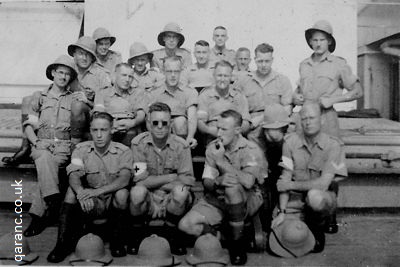
A reader has a long-standing interest in the British in Aden and has recently purchased a dozen photographs (see below) relating to hospital ships at Aden in late 1941. The originals are about 75 x 52mm. Above each is what is written in the photo album that they were originally held in. The owner does not know which ship(s) the interior scenes were taken in, the only clue might be in the name of the person shown in the operating theatre, Alan Rigg. All the photos seem to emanate from Aden apart from C5 Ward, which also has the annotation Bombay on the back and the group photo which is annotated Suez. If you can help with any further information then please contact us.
C5 Ward 1941

Alan Rigg in the Surgery 1941

Hospital ship Atlantis at Aden 10 12 41
Hospital Ship Vira at Aden 1941

Hospital ship Amra at aden 1941
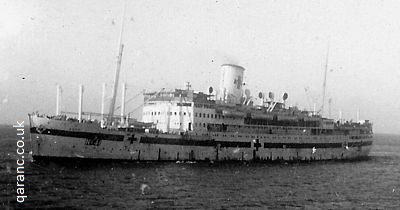
X-Ray Apparatus 1941

Hospital Ship Tairea at Aden 1941

Theatre

C4 Ward

X Ray Display

Steriliser

Medical Team Suez
Korea War Hospital Ship
Less than 5 years after World War II and one year after becoming a corps the QAs served aboard another hospital ship in another war. HS Maine II was mobilised to care for and transfer casualties from the Korea War in 1950 until relieved by three American hospital ships. Read more about the Korean War and the QARANC.
Falklands War Hospital Ships
During the Falklands War in 1982 the cruise ship Uganda was converted into a hospital ship. It was supported by ambulance boats and ships from the Ocean Surveys Ships of Hecla, Herald and the Hydra.
Royal Yacht Britannia
Before its decommission the Royal Yacht Britannia could have been easily turned into a troop hospital ship in the event of a war or conflict.
American hospital ships include the USNS Comfort and the USNS Mercy.
Mercy Ships
They are still in use today by the charity mercyships in third world and war torn countries like Africa, and nations like Liberia and Sierra Leone performing life saving surgery or operations to save or improve eye sight, deformities or relieve pain and illnesses. Read more about Mercy Ships at www.mercyships.org.uk
Hospital Ship Wandilla
An Italian surgeon and enthusiast of history is researching Hospital Ship Wandilla, an Australian liner enlisted during WWI. He hopes to publish an article in the Italian Red Cross Magazine. The medical staff, nurses included, who served on the vessel were British. Members of the QAIMNS he has researched as being on board included Sister Mary (Molly) Best. She wrote some notes about being on duty on the ship. It was bought by Furness Bermuda Lines in 1921 and in 1936 they sold it to an Italian Steamship Company who renamed her Cesarea. She was then employed by the Italian Army as a Hospital Ship during the war with Eritrea and in WWII where she was named Armo.
If you can help with further information about it and the members of the QAIMNS who served on her then please contact us.
Hospital Ship Chantilly 63.
Free Book.
The death of the Brotherhood will be avenged.
RAF gunner Jason Harper and a team of Special Air Service operators are enraged after the death of their brothers by a terrorist drone strike. They fly into south-eastern Yemen on a Black-op mission to gather intelligence and avenge the death of their comrades.
Can they infiltrate the Al-Queda insurgents' camp, stay undetected, and call down their own drone missile strike and get home safely?
Will they all survive to fight another day?
Operation Wrath is a free, fast-paced adventure prequel to the non-stop action The Fence series by military veteran author C.G. Buswell.
Download for free on any device and read today.
This website is not affiliated or endorsed by The Queen Alexandra's Royal Army Nursing Corps (QARANC) or the Ministry of Defence.
» Contact
» Advertise
» QARANC Poppy Pin
» Poppy Lottery
» The Grey Lady Ghost of the Cambridge Military Hospital Novel - a Book by CG Buswell
» The Drummer Boy Novel
» Regimental Cap Badges Paintings
Read our posts on:
Offers
» Army Discounts
» Claim Uniform Washing Tax Rebate For Laundry
» Help For Heroes Discount Code
» Commemorative Cover BFPS 70th anniversary QARANC Association

Present Day
» Become An Army Nurse
» Junior Ranks
» Officer Ranks
» Abbreviations
» Nicknames
» Service Numbers
Ministry of Defence Hospital Units
» MDHU Derriford
» MDHU Frimley Park
» MDHU Northallerton
» MDHU Peterborough
» MDHU Portsmouth
» RCDM Birmingham
» Army Reserve QARANC
Photos
» Florence Nightingale Plaque
» Photographs
Uniform
» Why QA's Wear Grey
» Beret
» Army Medical Services Tartan
» First Time Nurses Wore Trousers AV Anti Vermin Battledress
» TRF Tactical Recognition Flash Badge
» Greatcoat TFNS
» Lapel Pin Badge

» Army School of Psychiatric Nursing Silver Badge
» Cap Badge
» Corps Belt
» ID Bracelet
» Silver War Badge WWI
» Officer's Cloak
» QAIMNSR Tippet
» QAIMNS and Reserve Uniform World War One
» Officer Medal
» Hospital Blues Uniform WW1
Events
» Armed Forces Day
» The Nurses General Dame Maud McCarthy Exhibition Oxford House London
» Edinburgh Fringe Stage Play I'll Tell You This for Nothing - My Mother the War Hero
» Match For Heroes
» Recreated WWI Ward
» Reunions
» Corps Day
» Freedom of Rushmoor
» Re-enactment Groups
» Military Events
» Remembrance
» AMS Carol Service
» QARANC Association Pilgrimage to Singapore and Malaysia 2009
» Doctors and Nurses at War
» War and Medicine Exhibition
» International Conference on Disaster and Military Medicine DiMiMED
» QA Uniform Exhibition Nothe Fort Weymouth
Famous QA's
» Dame Margot Turner
» Dame Maud McCarthy
» Lt Col Maureen Gara
» Military Medal Awards To QAs
» Moment of Truth TV Documentary
» Sean Beech
» Staff Nurse Ella Kate Cooke
Nursing
Nursing Jobs Vacancies UK
International Nurses Day
International Midwife Day
Info
» Search
» Site Map
» Contact
» Other Websites
» Walter Mitty Military Imposters
» The Abandoned Soldier
We are seeking help with some answers to questions sent by readers. These can be found on the Army Nursing page.
» Find QA's
» Jokes
» Merchandise
» Mugs
» Personalised Poster
» Poppy Badges
» Stamp
» Teddy Bears
» Pin Badges
» Wall Plaques
» Fridge Magnet