


» Site Map
» Home Page
Historical Info
» Find Friends - Search Old Service and Genealogy Records
» History
» QAIMNS for India
» QAIMNS First World War
» Territorial Force Nursing Service TFNS
» WW1 Soldiers Medical Records
» Field Ambulance No.4
» The Battle of Arras 1917
» The German Advance
» Warlencourt Casualty Clearing Station World War One
» NO 32 CCS Brandhoek - The Battle of Passchendaele
» Chain of Evacuation of Wounded Soldiers
» Allied Advance - Hundred Days Offensive
» Life After War
» Auxiliary Hospitals
» War Graves Nurses
» Book of Remembrance
» Example of Mentioned in Despatches Letter
» Love Stories
» Autograph Book World War One
» World War 1 Letters
» Service Scrapbooks
» QA World War Two
» Africa Second World War
» War Diaries of Sisters
» D Day Normandy Landings
» Belsen Concentration Camp
» Italian Sailor POW Camps India World War Two
» VE Day
» Voluntary Aid Detachment
» National Service
» Korean War
» Gulf War
» Op Telic
» Op Gritrock
» Royal Red Cross Decoration
» Colonels In Chief
» Chief Nursing Officer Army
» Director Army Nursing Services (DANS)
» Colonel Commandant
» Matrons In Chief (QAIMNS)
Follow us on Twitter:

» Grey and Scarlet Corps March
» Order of Precedence
» Motto
» QA Memorial National Arboretum
» NMA Heroes Square Paving Stone
» NMA Nursing Memorial
» Memorial Window
» Stained Glass Window
» Army Medical Services Monument
» Recruitment Posters
» QA Association
» Standard
» QA and AMS Prayer and Hymn
» Books
» Museums
Former Army Hospitals
UK
» Army Chest Unit
» Cowglen Glasgow
» CMH Aldershot
» Colchester
» Craiglockhart
» DKMH Catterick
» Duke of Connaught Unit Northern Ireland
» Endell Street
» First Eastern General Hospital Trinity College Cambridge
» Ghosts
» Hospital Ghosts
» Haslar
» King George Military Hospital Stamford Street London
» QA Centre
» QAMH Millbank
» QEMH Woolwich
» Medical Reception Station Brunei and MRS Kuching Borneo Malaysia
» Military Maternity Hospital Woolwich
» Musgrave Park Belfast
» Netley
» Royal Chelsea Hospital
» Royal Herbert
» Royal Brighton Pavilion Indian Hospital
» School of Physiotherapy
» Station Hospital Ranikhet
» Station Hospital Suez
» Tidworth
» Ghost Hunt at Tidworth Garrison Barracks
» Wheatley
France
» Ambulance Trains
» Hospital Barges
» Ambulance Flotilla
» Hospital Ships
Germany
» Berlin
» Hamburg
» Hannover
» Hostert
» Iserlohn
» Munster
» Rinteln
» Wuppertal
Cyprus
» TPMH RAF Akrotiri
» Dhekelia
» Nicosia
Egypt
» Alexandria
China
» Shanghai
Hong Kong
» Bowen Road
» Mount Kellett
» Wylie Road Kings Park
Malaya
» Kamunting
» Kinrara
» Kluang
» Penang
» Singapore
» Tanglin
» Terendak
Overseas Old British Military Hospitals
» Belize
» Falklands
» Gibraltar
» Kaduna
» Klagenfurt
» BMH Malta
» Nairobi
» Nepal
Middle East
» Benghazi
» Tripoli
Field Hospitals
» Camp Bastion Field Hospital and Medical Treatment Facility MTF Helmand Territory Southern Afghanistan
» TA Field Hospitals and Field Ambulances
Cambridge Military Hospital CMH Aldershot
Information and history about the Cambridge Military Hospital CMH Aldershot
 The Cambridge Military Hospital (CMH) was the fifth military hospital built in Aldershot. The other four are
described at the end of this article.
The Cambridge Military Hospital (CMH) was the fifth military hospital built in Aldershot. The other four are
described at the end of this article.
The CMH was built by Messrs Martin Wells and Co. of Aldershot. The building costs were approximately £45,758.
Aldershot Military Hospital Original Plans.

 I have published a book which tells the story of The Grey Lady Ghost of the Cambridge Military Hospital which reveals her origins in the QAIMNS and where she meets a QA veteran
of Afghanistan.
I have published a book which tells the story of The Grey Lady Ghost of the Cambridge Military Hospital which reveals her origins in the QAIMNS and where she meets a QA veteran
of Afghanistan.
She still walks her wards and tells her story by taking Scott Grey, a QARANC nurse, to the battlefields of World War One and beyond.
This is the first in the series of Grey and Scarlet Novels by CG Buswell. Read the first chapter for free.
The first patients admitted to the CMH were on Friday 18 July 1879. They either walked or were taken by cart ambulance from the Connaught Hospital.
Juliet Piggott cites in her book Queen Alexandra's Royal Army Nursing Corps (Famous Regts. S)
 that the House of Commons were presented with the plans of the Cambridge Military Hospital Aldershot as early as the year 1858.
Early Matrons at the CMH Aldershot included Dame Maud McCarthy.
The book Sub Cruce Candida: A Celebration of One Hundred Years of Army Nursing
 has many historical photographs of nurses, wards and the exterior of the Cambridge Military Hospital. These photos include the front view, the bell tower, a visit by
the Colonel-in-Chief, Her Royal Highness Princess Margaret, to the QARANC Preliminary Training School and the School of Nursing and the junior ranks dining room and the
Louise Margaret Maternity Hospital which includes the maternity and post natal wards.
has many historical photographs of nurses, wards and the exterior of the Cambridge Military Hospital. These photos include the front view, the bell tower, a visit by
the Colonel-in-Chief, Her Royal Highness Princess Margaret, to the QARANC Preliminary Training School and the School of Nursing and the junior ranks dining room and the
Louise Margaret Maternity Hospital which includes the maternity and post natal wards.
Inspectors Report 1902 by Surgeon-General Keogh and Mr Fripp.
Follow us on Facebook, Instagram and Twitter.
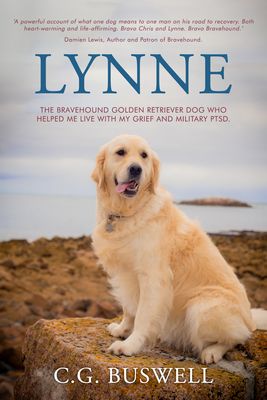
My PTSD assistance dog, Lynne, and I have written a book about how she helps me with my military Post Traumatic Stress Disorder, anxiety, and depression. I talk about my time in the QAs and the coping strategies I now use to be in my best health.
Along the way, I have had help from various military charities, such as Help for Heroes and The Not Forgotten Association and royalties from this book will go to them and other charities like Bravehound, who paired me with my four-legged best friend.
I talk openly about the death of my son by suicide and the help I got from psychotherapy and counselling and grief charities like The Compassionate Friends.
The author, Damien Lewis, said of Lynne:
"A powerful account of what one dog means to one man on his road to recovery. Both heart-warming and life-affirming. Bravo Chris and Lynne. Bravo Bravehound."
Download.
Buy the Paperback.
This beautiful QARANC Poppy Pin Badge is available from the Royal British Legion Poppy Shop.
For those searching military records, for information on a former nurse of the QAIMNS, QARANC, Royal Red Cross, VAD and other nursing organisations or other military Corps and Regiments, please try Genes Reunited where you can search for ancestors from military records, census, birth, marriages and death certificates as well as over 673 million family trees. At GenesReunited it is free to build your family tree online and is one of the quickest and easiest ways to discover your family history and accessing army service records.
More Information.
Another genealogy website which gives you access to military records and allows you to build a family tree is Find My Past which has a free trial.
The book A British Army Nurse In the Korean War
 written by Captain Jilly McNair of the
QARANC describes life at the Cambridge Military Hospital in the early 1950s and her interviews with Matron in her office when Capt McNair learnt she was to be posted to
Japan as part of the Commonwealth Forces treating injured soldiers from the Korea. Prior to her posting Captain Elizabeth Jilly McNair had worked on ward 6 which was the
acute surgical orthopaedic ward.
More Information.
written by Captain Jilly McNair of the
QARANC describes life at the Cambridge Military Hospital in the early 1950s and her interviews with Matron in her office when Capt McNair learnt she was to be posted to
Japan as part of the Commonwealth Forces treating injured soldiers from the Korea. Prior to her posting Captain Elizabeth Jilly McNair had worked on ward 6 which was the
acute surgical orthopaedic ward.
More Information.
How Did The CMH Get Its Name?
The title had nothing to do with the Cambridge area but came from His Royal Highness The Duke of Cambridge who was the Commander-in-Chief of the Army at the time. The Duke of Cambridge opened the CMH Aldershot in July 1879.
The Design Of The Hospital
The hospital was built on a hill because current clinical thinking at the time thought that the wind would sweep away any infection and clean the air.
Miss Sidney Browne Matron-in-Chief Hospital Inspection 1903
The CMH was famed for its supposedly mile long corridor. We have never measured it but walking from casualty down to the children's ward often felt like it! The original plan was to have a series of self contained wards for regiments all joined onto the corridor. It was hoped that this would also reduce cross infection. By the time the hospital opened it had been decided to run the hospital as areas of treatment rather than type of cap badge.
The hospital soon became a fully functioning hospital and was the first in the UK to receive battle casualties directly from the front of World War One.
The Cambridge Military Hospital was the first British Military Hospital to open a plastic surgery unit. This was opened by Captain Gillies. He had been in France on leave in June 1915 and met the surgeon Hippolyte Morestin and watched him perform facial reconstructions on patients with cancer. He learnt from the surgeon and brought his experience and new knowledge to England and was soon operating on soldiers back from the Battle of the Somme of World War One with facial gunshot and shrapnel wounds and injuries. Dental work was performed by William Kelsey Fry and the plastic surgery unit was overseen by Sir W. Arbuthnot.
There is more written about this in the book The Facemaker: One Surgeon's Battle to Mend the Disfigured Soldiers of World War.
 Over the decades the hospital grew and not only treated soldiers and their families but local civilians. Departments
grew and included an accident and emergency unit, children's, medical, plastic surgical, general surgery, burns,
gynaecological, intensive care and orthopaedic wards. Departments included several theatres, an X-ray unit, an out
patients department and a large laboratory at the rear of the CMH. This was called the Leishman Laboratory. It was
opened by Lady Leishman in 1932, wife of Royal Army Medical Corps (RAMC) Chair of Pathology Sir William Leishman.
Over the decades the hospital grew and not only treated soldiers and their families but local civilians. Departments
grew and included an accident and emergency unit, children's, medical, plastic surgical, general surgery, burns,
gynaecological, intensive care and orthopaedic wards. Departments included several theatres, an X-ray unit, an out
patients department and a large laboratory at the rear of the CMH. This was called the Leishman Laboratory. It was
opened by Lady Leishman in 1932, wife of Royal Army Medical Corps (RAMC) Chair of Pathology Sir William Leishman.
1932 Plans of the Cambridge and Louise Margaret Hospitals in Stanhope Lines, Aldershot Garrison.
The Louise Margaret Hospital
 The Louise Margaret Hospital was annexed to the CMH and integrated with the Unit in 1984 and cared for pre and post natal women and their babies. There
was also a special care baby unit (SCBU).
The Louise Margaret Hospital was annexed to the CMH and integrated with the Unit in 1984 and cared for pre and post natal women and their babies. There
was also a special care baby unit (SCBU).
The Louise Margaret Hospital opened in 1898 and its function was initially to care for the wives and children of servicemen. It was named after Princess Louise Margaret, the Duchess of Connaught whose husband was the Duke of Connaught who was at the time the GOC of Aldershot Command (cited in the book Queen Alexandra's Royal Army Nursing Corps (Famous Regts. S)
by Juliet Piggott).
Those who have visited the Louise Margaret Maternity Hospital may recall the narrow and shallow staircases. They were designed to allow nurses to run quickly up and down the stairs in their long nursing dressses.
The Louise Margaret Hospital continued to care for the spouses and children of the army until 1958 when its function and name changed to a maternity hospital.
The book Queen Alexandra's Royal Army Nursing Corps (Famous Regts. S)
by Juliet Piggott has a photo of a nurse and doctor with a baby in the Infant Care Centre of the Louise Margaret Maternity Hospital, Aldershot.
The first pupil midwives to undertake Part I of the Midwifery Training was at the Louise Margaret Hospital in Aldershot. They were four officers and four sergeants (cited in the book Queen Alexandra's Royal Army Nursing Corps (Famous Regts. S)
by Juliet Piggott).
The book Sub Cruce Candida: A Celebration of One Hundred Years of Army Nursing
has a lovely photo of former soldier and TV comedian Arthur English, his wife Teresa and their new born baby daughter Clare Louise at the Louise Margaret Maternity Hospital in January 1980.

Student Nurse Private Karla Partridge with two day old baby Naomi Adams at Louise Margaret Maternity Hospital 10 September 1989.
The Louise Margaret Hospital closed on the 18 January 1995.
The last baby to be born there was pictured on the front cover of The Soldier magazine 20 February 1995 along with the parents, midwives, nurses and health care assistants. The two day old baby was Alexander Lavallin whose parents, Mark and Tracey, were interviewed with Deputy Matron Lt Col Jean Alexander. Read the article.
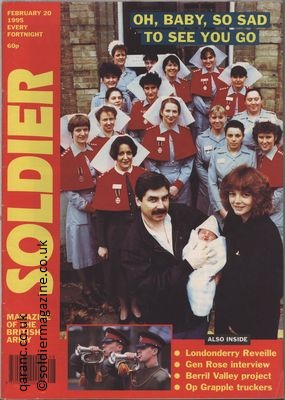
 Adjoined to the Louise Margaret Hospital was the school of nursing. Beyond this was the RAMC officers' accommodation.
The junior ranks accommodation was at the rear with each sex separated by the mortuary and chapel of rest! The male
accommodation for junior ranks was of particular note being the pre-war spiders' type barrack block. QARANC
officers had their own mess and accommodation at the front of the hospital.
Adjoined to the Louise Margaret Hospital was the school of nursing. Beyond this was the RAMC officers' accommodation.
The junior ranks accommodation was at the rear with each sex separated by the mortuary and chapel of rest! The male
accommodation for junior ranks was of particular note being the pre-war spiders' type barrack block. QARANC
officers had their own mess and accommodation at the front of the hospital.
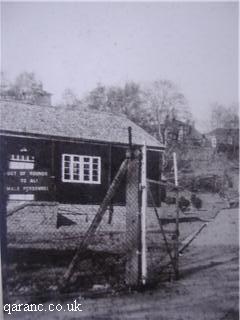
The black and white photo below is of the gates to the female accommodation spider hut at the CMH Aldershot taken in 1969 . More modern accommodation was build further behind the spiders though these huts were still used in the 1990s. QAs may well remember the draughts and leaking roofs!
CMH Clock Tower
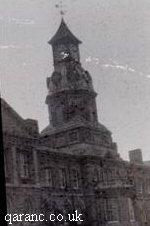 An architectural and distinguishing feature of the Cambridge Military Hospital was the clock tower. There were three
bells in the clock tower, one large bell and two smaller bells.
An architectural and distinguishing feature of the Cambridge Military Hospital was the clock tower. There were three
bells in the clock tower, one large bell and two smaller bells.
The larger bell had a twin. They were known as the Sebastopol bells. The other of the pair is at Windsor Castle. These bells were captured from the Russians during the Crimea War. They were originally from the Church of the Twelve Apostles in Sebastopol. Each bell weighed 17cwt 1qr 21lb and were cast by Nicholas Samtoun of Moscow. After their capture as a war trophy they were put on display at the Woolwich Royal Arsenal in February 1856. One bell then went to Windsor Castle whilst the other was erected at the Aldershot Headquarters Office between
Gun Hill and Middle Hill. A tradition was started where a sentry would ring the bell, like a gong, each hour. When the CMH was built it moved to the clock tower. The tradition of the hourly ring was maintained until 1914 when it was disturbing patients sleep. In March 1961 it moved once more. This time it went to Steeles Road. It was moved one last time to outside Gun Hill House.
The two smaller bells had the inscription "Cast by Gillet Bland & Co., clock makers to Her Majesty, Croydon 1878 London". These bells also rang out, but at quarter intervals until 1914.
Their is a beautiful picture of the Cambridge Military Hospital on the QA March page which has a profile of the CMH Clock Tower. This is on a recording of the Royal Army Medical Corps music which includes Grey and Scarlett. It is available to purchase from the AMS RHQ.

Former Royal Air Force Regiment Gunner Jason Harper witnesses a foreign jet fly over his Aberdeenshire home. It is spilling a strange yellow smoke. Minutes later, his wife, Pippa, telephones him, shouting that she needs him. They then get cut off. He sets straight out, unprepared for the nightmare that unfolds during his journey. Everyone seems to want to kill him.
Along the way, he pairs up with fellow survivor Imogen. But she enjoys killing the living dead far too much. Will she kill Jason in her blood thirst? Or will she hinder his journey through this zombie filled dystopian landscape to find his pregnant wife?
The Fence is the first in this series of post-apocalyptic military survival thrillers from the torturous mind of former British army nurse, now horror and science fiction novel writer, C.G. Buswell.
Download Now.
Buy the Paperback.
If you would like to contribute to this page, suggest changes or inclusions to this website or would like to send me a photograph then please e-mail me.
Boer War Memorial Aldershot
At the top of Hospital Hill, between the CMH and what was the QARANC Officers Mess is a Boer War Memorial to the South Africa Campaign of 1899 to 1902. It commemorates the 314 officers and servicemen of the newly formed Royal Army Medical Corps (RAMC) that were killed during the Boer War. It was unveiled by King Edward VII on Empire Day, 24 May 1905. Members of the Ministry of Defence Hospital Unit MDHU Frimley Park hold parades here on Remembrance Day.
World War Two
The Cambridge Military Hospital were one of the first UK military hospitals to have QAs on stand by to nurse the wounded and injured of World War Two. Sisters of the Queen Alexandra's Imperial Military Nursing Service (QAIMNS) were put on stand by to travel to Egypt as early as 1938 when news of the annexation of Czechoslovakia was announced. These sisters were due to travel to India and were place on a two hour stand by. There is more written about this in Quiet Heroines: Nurses of the Second World War
 by Brenda McBryde.
Freedom of Aldershot
This section has moved to the Freedom Borough Aldershot 1973 page.
First Gulf War
During the First Gulf War Conflict of 1990 to 1991 the staff of the Cambridge Military Hospital were mobilised to Iraq and Kuwait. The hospital closed and the Queen Elizabeth Military Hospital (QEMH), Woolwich stayed open and received battle casualties and sick soldiers. Read More. It re-opened on the 13 May 1991.
Centenary Visit by Princess Anne
Surgeon, Colonel Parker (RAMC) meeting Her Royal Highness Princess Anne in 1979 on the centenary .

Centenary coverage by Soldier Magazine.
Visits by Princess Margaret
The book Sub Cruce Candida: A Celebration of One Hundred Years of Army Nursing
has photos of the visits by Her Royal Highness Princess Margaret, the
Colonel in Chief of the QARANC, to CMH Aldershot in 1995 and 1996.
Cambridge Military Hospital Closure
The Cambridge Military Hospital closed down on the 2 February 1996. Many factors were given as the reason for its closure. This includes the restructuring of a more mobile army needing to train and utilise their nurses for front line treatments in field hospitals. Soldiers brought back to the UK could easily be treated in civilian hospitals.
Another reason for the closure of the CMH was because it was an old historic building that cost too much to maintain and repair. For example asbestos was found in the walls and the ceilings and was expensive to safely remove. The upper floor was unable to be used for patient care because of fire health and safety. This reduced the bed capacity of the hospital.
Other health and safety issues involved the kitchens that needed upgrading and the water supply throughout the hospital often had a yellow tinge from running through cast iron pipes.
The Army Medical Services exercised the Freedom of the Borough of Rushmoor and marched through Aldershot on Thursday 11 January 1996. Members of the 130 officers and soldiers in the parade consisted of the QARANC, RAMC, RADC, RLC and AGC and they were commanded by Lt Col Mick French RAMC.
The Band of the Parachute Regiment, who served with members of 33 Field Hospital who largely comprised of staff of the CMH during the First Gulf War, led the march.
The saluting dais was located outside The Princes Hall in Aldershot town and the salute was taken by the Director General of the Army Medical Services, Major General F B Mayes CB QHS L/RAMC and the Lady Mayor of Rushmoor, Mrs Pat Devereux.
A small reception was held before the parade in Princes Hall and the Lady Major of Rushmoor, Mrs Pat Devereux, presented a commemorative silver salver as thanks from the population of Aldershot to the AMS for service to the community to Major General F B Mayes CB QHS L/RAMC, DGAMS. In attendance were the Commanding Officer of the Cambridge Military Hospital Brigadier M Daly L/RAMC and the Matron Lt Col P Moody QARANC. Past Matrons and COs of the CMH were in attendance.
In the evening a Beating Retreat Ceremony event took place outside the CMH. (Cited in an article by Major P A Conway QARANC in Vol 11 No 2 of The Gazette of the Queen Alexandra's Royal Army Nursing Corps Association).
Many of the staff were posted to the newly opened MDHU Frimley Park.
The address of the Cambridge Military Hospital was:
Cambridge Military Hospital
Hospital Road
Aldershot
Hampshire
GU11 2AN
The buildings and land of the Cambridge Military Hospital and the Louise Margaret Maternity Hospital is owned by Defence Estates (DE) and in 2011 developer Grainger plc was appointed to create a new development of about 4,500 houses and flats, 35% of which will be affordable, and community facilities such as schools, publicly accessible open spaces, community and leisure facilities in the Aldershot area. About 200 will be built along Hospital Road. The development work, which is due to start early 2013, will include restoration and conversion of the Cambridge Military Hospital.
The CMH had a ghost of a grey lady. More about her can be read on the Army and Nurses Ghosts Page.
Other Military Hospitals In Aldershot
The first military hospital in Aldershot was situated near the Garrison Church and opposite the eventual site for the CMH. It treated mentally ill and soldiers with infectious diseases.
The Union Hospital became the second army hospital in Aldershot. It was built at South Camp, behind Salamanca barracks in the 1860s. It was originally a private residence, a poor house and a pauper house. The Union hospital was restricted to treat 16 patients.
The United Hospital was the third army hospital in North Camp.
The last hospital which was eventually replaced by the CMH was the Connaught Hospital.
CMH Nurses
The QARANC student nurse in the photo below is SN Private Dorothy Davey who was a QA student nurse in the early 1960s. She recalls being taught anatomy and physiology by a male Scottish Captain. She thought he had said the human skeleton gives virginity to the body rather than the human skeleton gives rigidity to the body! She repeated this in her exam and was the gossip of the camp! Wherever she went fellow QAs and medical personnel would grin at her. She thought they were being friendly to her rather than having a laugh at her expense! Despite this Dorothy passed her exams achieving 78% and was posted to BMH Iserlohn.
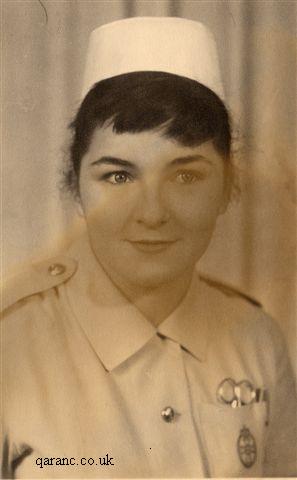
Read an Army Student Nurse memories of the CMH.
Lt General Sir Brian Horrocks
In the introduction to the book Queen Alexandra's Royal Army Nursing Corps (Famous Regts. S)
by Juliet Piggott, Lt General Sir Brian Horrocks tells of his admiration for the QAs and how his life was saved by the expert care of the QAIMNS (Queen Alexandra's Imperial Military Nursing Service) who nursed him at the Cambridge Military Hospital in 1943. General Horrocks held each QA in such high esteem he broke military law for them! He describes how on one Hogmanay night many of the nurses had been invited to a New Year dance in an Officers Mess in Aldershot. The rules stated that each QA nurse must be back at their accommodation by 11pm. However this meant they would miss seeing in the New Year with the bells at midnight.
The nurses got together and approached the General who was by this time well used to them popping into his side room for a chat because he was a popular long term patient recovering from a bullet wound during service in North Africa to the chest that affected many internal organs and exited his spine. The General proved good company and was a popular patient. The group of nurses had a cunning plan - they wanted to use the Lt General Sir Brian Horrocks ground floor window to get back into the hospital without any authority realising they were late home.
All went well until the Head Night Sister witnessed one young nurse emerge from the General's room. She gave chase and the nurse ran to her accommodation and jumped into bed pretending to be asleep. Her plan back fired when the Head Night Sister got to her room and woke up the nurse and asked why she was asleep with her hat on! The nurse promptly found herself on a charge.
Memories Of The CMH

This photo of a group of PTS student nurses from Christmas 1969 at the CMH Aldershot was taken by Angela Coote. She thinks her fellow student nurses were Olga Borkowski and the other students were Wendy ? and ? Can you help Angela with the names? If so please contact the QARANC.co.uk team and we shall pass on details. Thank you!
 Angela recalls being billeted in spider huts at the bottom of the hill which can be seen in the photograph to the left. Of her time at the Cambridge Military Hospital Angela fondly says:
We all used to troop up to no. 1 spider at night in our pyjamas as that was where the TV was. One television between us all! Huge sign on the gate saying OUT OF BOUNDS TO ALL MALE PERSONNEL. Though most of us knew where the hole in the wire fence was! Those were the days of bed checks at 22.59 unless you had a late pass until 2359.
I can remember nearly passing out in the ironing room with the fumes from the spray starch we all used on our ward dresses. Each unit had a different way of pressing their dress to individualize it. For example the girls from Woolwich would press a sharp crease across the shoulders of the dress whilst No 1 Coy pressed a crease from the middle of the pocket to the hem. We sent a willing shopper off to Oxford Street to buy paper ward caps by the dozen which had just been developed. This saved us spending hours in the Dhobi room trying to make a sad old piece of soggy muslin sit up and look like a cap. We earned the princely sum of £4 19s 9d (just under £5) per week.
Read more memories from Angela Coote on the BMH Iserlohn page.
************

The photograph to the left is Doreen Duncan (now Hounsham) who joined the Queen Alexandra's Royal Army Nursing Corps in 1960.
Below is a picture of Doreen on a trip to London with her colleagues:

Doreen married Terry in 1964. He was an SRN at the Cambridge Military Hospital.
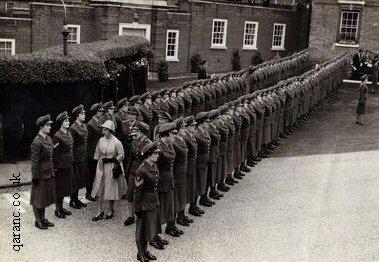
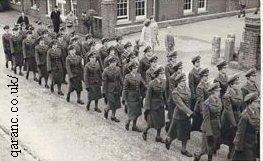
These two photos show the parade, guard of honour and march past during a visit by the Colonel in Chief Princess Margaret to the Louise Margaret Maternity Hospital in 1960. Six years later Doreen's daughter, Wendy, was born in the hospital.
************
I recall some fairly spectacular parties in the midwives' block below Cambridge Military Hospital at Aldershot. They would typically commence with an evening in Queenie's bar in town and with a decision to lay in stocks of cheap wine at the off-licence and head back to the block - any Billy Connolly record brings back memories. It was a source of much amusement and a lot of leg-pulling that the QA nurses would not go down the hill past the mortuary after dark! (Ken RAMC)
************
Having read your interesting item on the Cambridge Military Hospital, I am reminded as a small boy going to visit my great-aunt Doris Hanney, who was Matron (1948 approx) and was recovering from a fractured leg having slipped on a door-mat due to the high polish in the corridors. She trained at King Edward VII Hospital, Windsor, joined the QAIMNS 1 Sep 1927 at Catterick, served in India 1927-1934, returning to India 1938-1944, then Europe, and West Africa 1950-1953, reaching Lt Col rank in the QARANC by retirement in 1954. Her medals are ARRC, 1939-45 Star, Burma Star, France & Germany Star, 1939-45 Defence Medal, 1939-45 War Medal. Her QAIMNS tippet badge is hallmarked 1927.
************
Help needed to identify if there was a Weite or White ward 16?
Hidden Histories presented by Michael Portillo are seeking folk who worked there to take part in their television programme.
If you have a memories of the CMH or other time or place during your service in the QAs and would like it to appear at the QARANC website then please contact us and help keep the QA history accessible to our readers.
Secret Tunnel CMH Aldershot Undertakers.
Photo of Sister Edna Lucy Craven relaxing on the lawn.
There are some photos of the Cambridge Military Hospital on the Urban Desertion website urbandesertion.squarespace.com which includes photos of the Admin Arches, Towers, Children's Ward, Clock Faces, Corridors, Kitchens, Maternity Theatres, Medical Library, Staircases, Wards and X-Ray Department.
Lady Superintendent Louise Margaret Hospital Aldershot.
Free Book.
The death of the Brotherhood will be avenged.
RAF gunner Jason Harper and a team of Special Air Service operators are enraged after the death of their brothers by a terrorist drone strike. They fly into south-eastern Yemen on a Black-op mission to gather intelligence and avenge the death of their comrades.
Can they infiltrate the Al-Queda insurgents' camp, stay undetected, and call down their own drone missile strike and get home safely?
Will they all survive to fight another day?
Operation Wrath is a free, fast-paced adventure prequel to the non-stop action The Fence series by military veteran author C.G. Buswell.
Download for free on any device and read today.
This website is not affiliated or endorsed by The Queen Alexandra's Royal Army Nursing Corps (QARANC) or the Ministry of Defence.
» Contact
» Advertise
» QARANC Poppy Pin
» Poppy Lottery
» The Grey Lady Ghost of the Cambridge Military Hospital Novel - a Book by CG Buswell
» The Drummer Boy Novel
» Regimental Cap Badges Paintings
Read our posts on:
Offers
» Army Discounts
» Claim Uniform Washing Tax Rebate For Laundry
» Help For Heroes Discount Code
» Commemorative Cover BFPS 70th anniversary QARANC Association

Present Day
» Become An Army Nurse
» Junior Ranks
» Officer Ranks
» Abbreviations
» Nicknames
» Service Numbers
Ministry of Defence Hospital Units
» MDHU Derriford
» MDHU Frimley Park
» MDHU Northallerton
» MDHU Peterborough
» MDHU Portsmouth
» RCDM Birmingham
» Army Reserve QARANC
Photos
» Florence Nightingale Plaque
» Photographs
Uniform
» Why QA's Wear Grey
» Beret
» Army Medical Services Tartan
» First Time Nurses Wore Trousers AV Anti Vermin Battledress
» TRF Tactical Recognition Flash Badge
» Greatcoat TFNS
» Lapel Pin Badge

» Army School of Psychiatric Nursing Silver Badge
» Cap Badge
» Corps Belt
» ID Bracelet
» Silver War Badge WWI
» Officer's Cloak
» QAIMNSR Tippet
» QAIMNS and Reserve Uniform World War One
» Officer Medal
» Hospital Blues Uniform WW1
Events
» Armed Forces Day
» The Nurses General Dame Maud McCarthy Exhibition Oxford House London
» Edinburgh Fringe Stage Play I'll Tell You This for Nothing - My Mother the War Hero
» Match For Heroes
» Recreated WWI Ward
» Reunions
» Corps Day
» Freedom of Rushmoor
» Re-enactment Groups
» Military Events
» Remembrance
» AMS Carol Service
» QARANC Association Pilgrimage to Singapore and Malaysia 2009
» Doctors and Nurses at War
» War and Medicine Exhibition
» International Conference on Disaster and Military Medicine DiMiMED
» QA Uniform Exhibition Nothe Fort Weymouth
Famous QA's
» Dame Margot Turner
» Dame Maud McCarthy
» Lt Col Maureen Gara
» Military Medal Awards To QAs
» Moment of Truth TV Documentary
» Sean Beech
» Staff Nurse Ella Kate Cooke
Nursing
Nursing Jobs Vacancies UK
International Nurses Day
International Midwife Day
Info
» Search
» Site Map
» Contact
» Other Websites
» Walter Mitty Military Imposters
» The Abandoned Soldier
We are seeking help with some answers to questions sent by readers. These can be found on the Army Nursing page.
» Find QA's
» Jokes
» Merchandise
» Mugs
» Personalised Poster
» Poppy Badges
» Stamp
» Teddy Bears
» Pin Badges
» Wall Plaques
» Fridge Magnet